
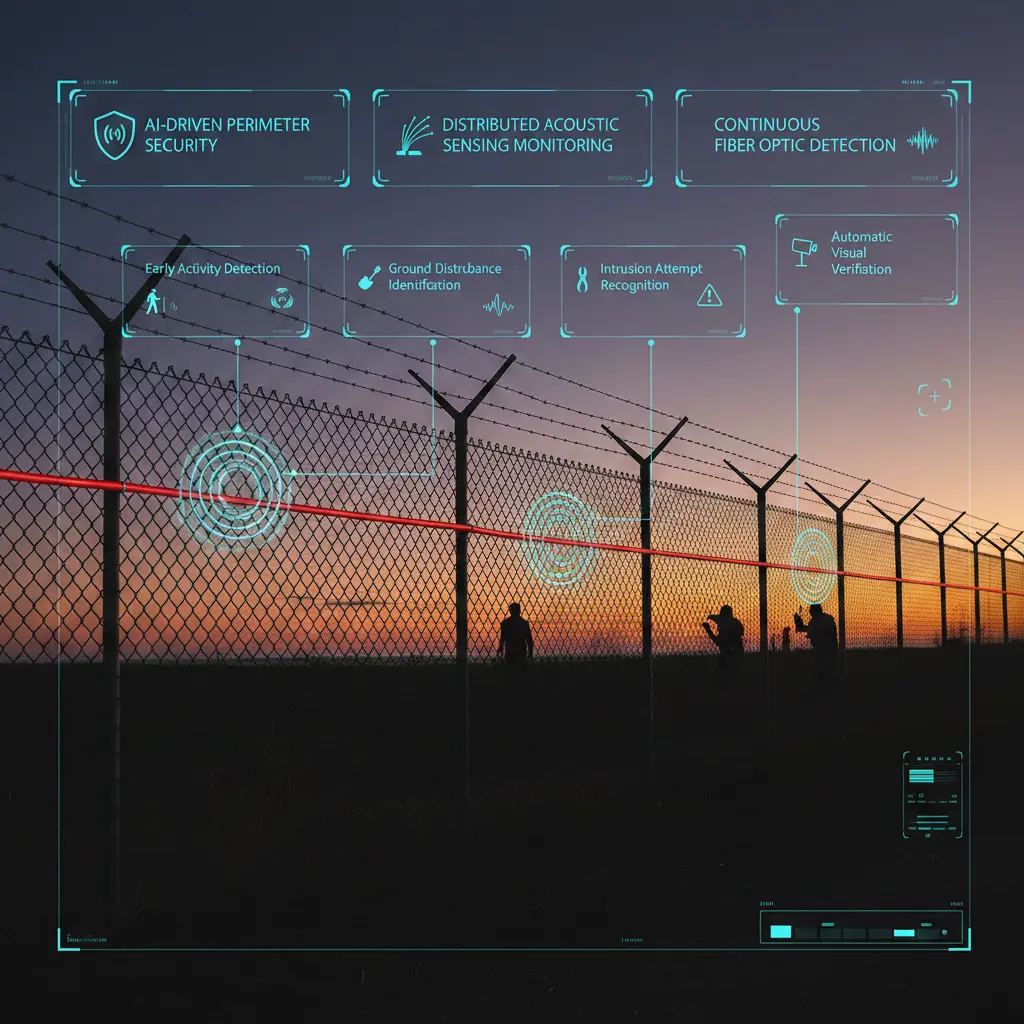
AI Is Redefining Perimeter Security
Seeing Is Not Enough: The Moment Before the Camera Matters
Artificial Intelligence has significantly improved modern perimeter security. Cameras can now distinguish people from vehicles, detect unusual movement patterns, and prioritize alerts automatically. Instead of reviewing endless footage, operators receive filtered information. Still, one practical limitation remains: AI systems mostly interpret what they can see. In real security operations, the most useful information often appears before anything enters the camera frame.
The Limit of Visual Analytics: What Happens Before the Camera Sees It
Video analytics depends on a simple physical constraint — line of sight. If an event is not visible, it cannot be analyzed. In most facilities, an intrusion rarely starts with a sudden breach. It progresses gradually:
Preparation –observing the site, looking for weak points
Approach – moving closer to the boundary
Contact – touching the fence or disturbing the ground
Breach – crossing the barrier
Traditional camera-based systems typically produce reliable alerts at the third or fourth stage. At that point, response is already reactive. The actual risk begins earlier — before a visible event exists. This is where security needs a different type of data: physical behavior, not imagery.
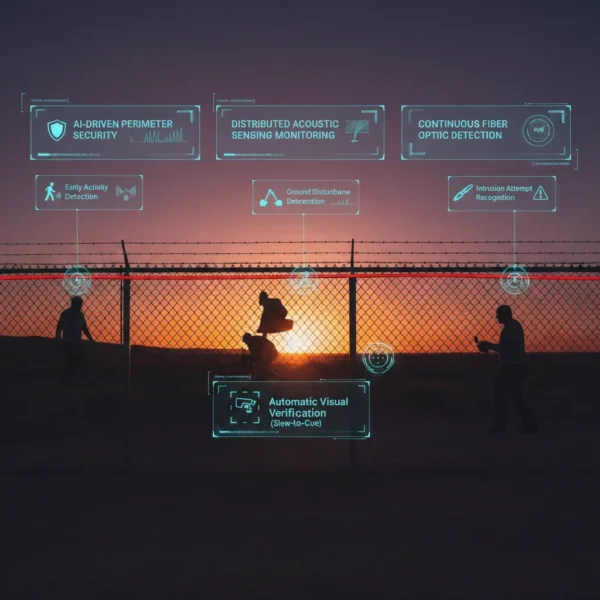
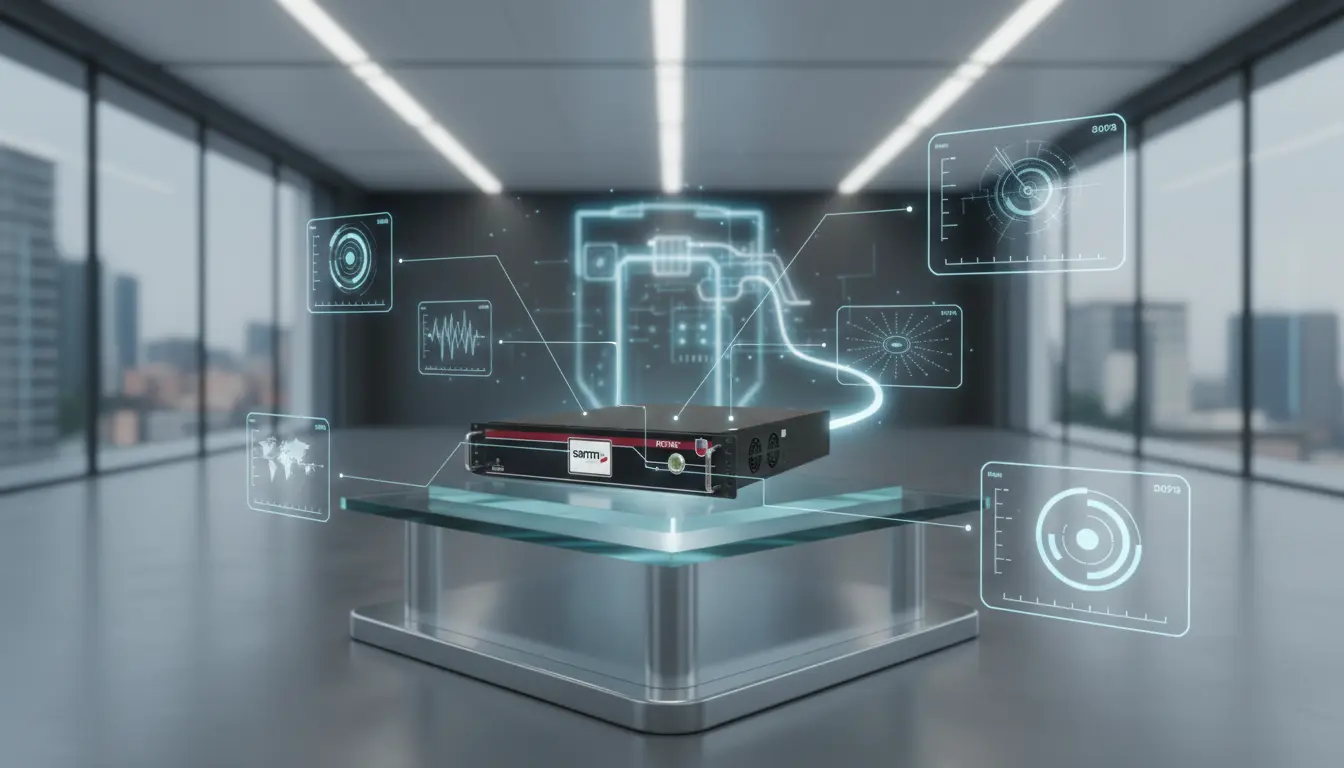
Distributed Acoustic Sensing: Giving AI a Sense Beyond Vision
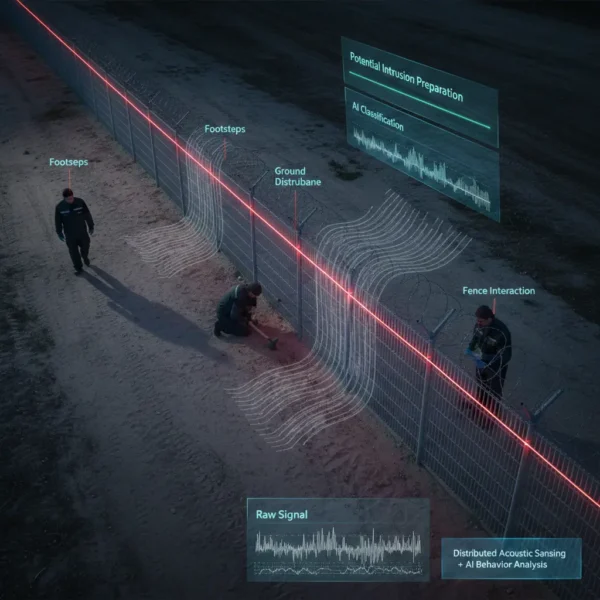
Distributed Acoustic Sensing (DAS) turns a fiber optic cable into a continuous sensing element along the perimeter. Instead of images, it measures tiny vibrations traveling through soil, fence structures, or nearby surfaces.
By itself, this signal is just raw measurement. Artificial Intelligence provides interpretation. AI analysis allows the system to distinguish between:
- footsteps and random vibration
- digging and environmental noise
- fence cutting and harmless contact
Over time, machine learning models learn the normal acoustic profile of a site. The focus shifts from detecting events to identifying intent. The question is no longer “What happened?” It becomes “Is something about to happen?”
Detect — Interpret — Verify: A Complementary Architecture
A modern Perimeter Intrusion Detection System (PIDS) combines multiple technologies, each serving a specific role:
DAS — Detection
Identifies activity along the boundary and provides precise location.
AI — Interpretation
Filters nuisance signals and classifies behavior.
Camera — Verification
Through slew-to-cue integration, automatically turns to the indicated coordinates for confirmation.
In this workflow, cameras stop being search tools.
They become confirmation tools.
Operators are not scanning screens anymore —
they are reviewing verified events.
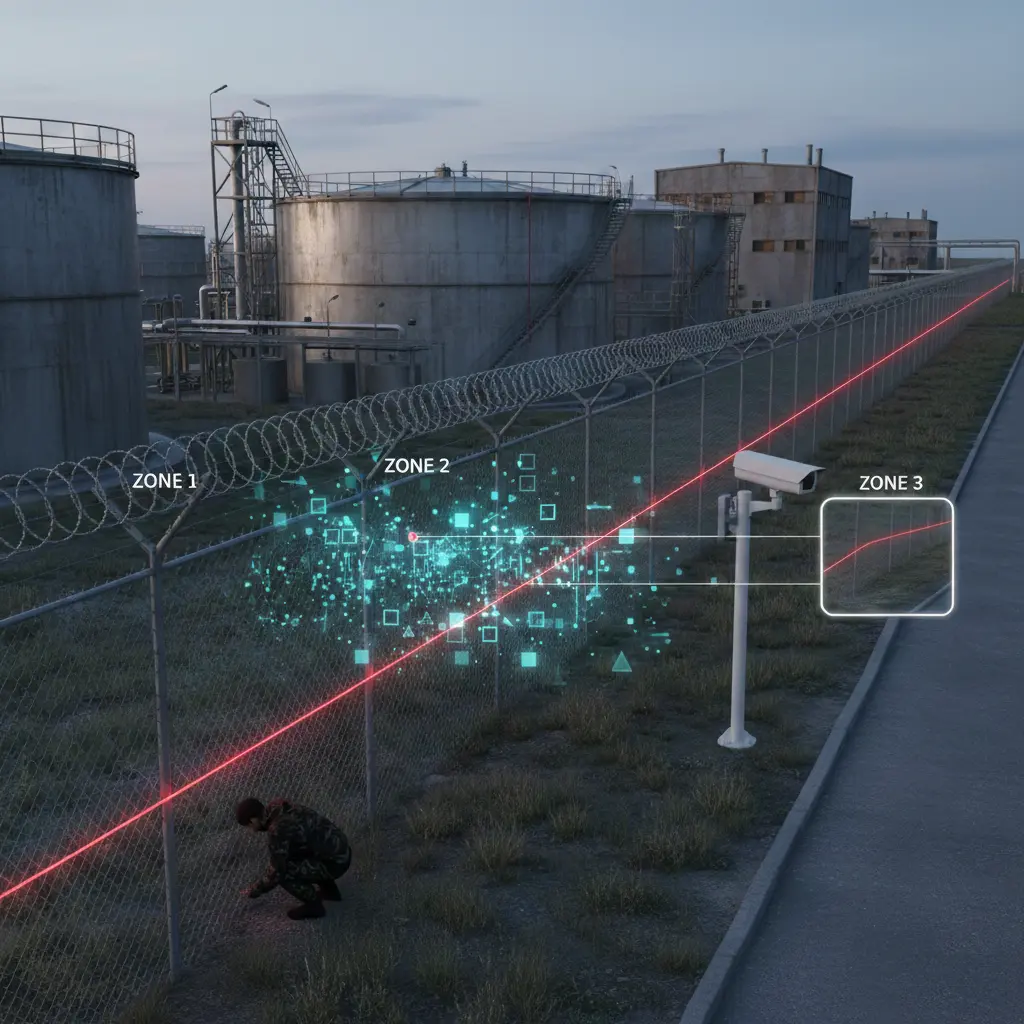
Why DAS Sits at the Center of AI-Driven Security
Artificial Intelligence depends on data quality.
Video provides visual evidence; DAS provides context.
By continuously sensing the perimeter, DAS supplies AI with information before visibility. This moves security from monitoring to anticipation.
AI improves decision-making speed.
DAS improves decision timing.
Conclusion: From Observation to Awareness
Security is gradually shifting from recording incidents to understanding behavior.
The objective is no longer simply detecting a breach but recognizing escalation early.
When Distributed Acoustic Sensing and Artificial Intelligence operate together, perimeter protection becomes proactive rather than reactive.
The value is not the alarm itself —
it is the time gained before the alarm would have been necessary.