


Sensing Cable Installation
The optical fiber sensing cable is installed along the asset or area requiring protection, including tunnels, conveyors, cable routes, storage areas and equipment rooms.

Distributed Temperature Sensing for continuous temperature monitoring and alarm localization across long and complex assets.
REQUEST A QUOTEFiber optic linear heat detection uses Distributed Temperature Sensing (DTS) to monitor temperature continuously along an optical fiber sensing cable.
A DTS interrogator sends laser pulses through the fiber and analyzes Raman backscatter to generate a distributed temperature profile along the installed sensing route. Configurable alarm criteria can identify abnormal thermal conditions and determine the relevant alarm position or alarm zone.
Unlike fixed-position heat detectors, DTS provides temperature information along the sensing cable rather than only at isolated detector locations. This makes it suitable for extended, electrically noisy or difficult-to-access infrastructure.
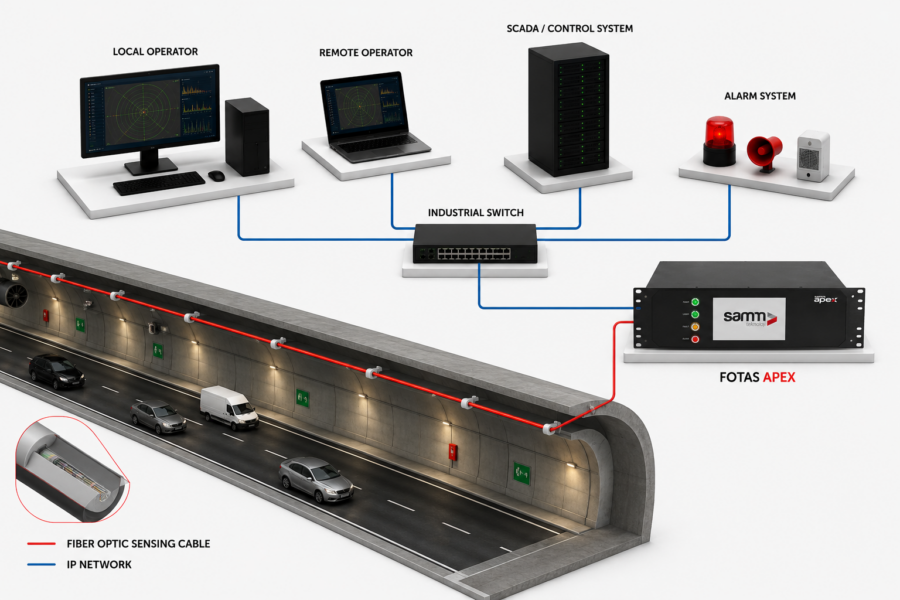
The sensing cable, DTS interrogator and alarm interfaces operate together as an application-specific monitoring system.
The optical fiber sensing cable is installed along the asset or area requiring protection, including tunnels, conveyors, cable routes, storage areas and equipment rooms.
The DTS interrogator measures temperature at defined positions along the fiber and generates a continuous temperature profile.
Temperature data is evaluated against configured alarm criteria. When a condition is met, the system identifies the relevant position or alarm zone.
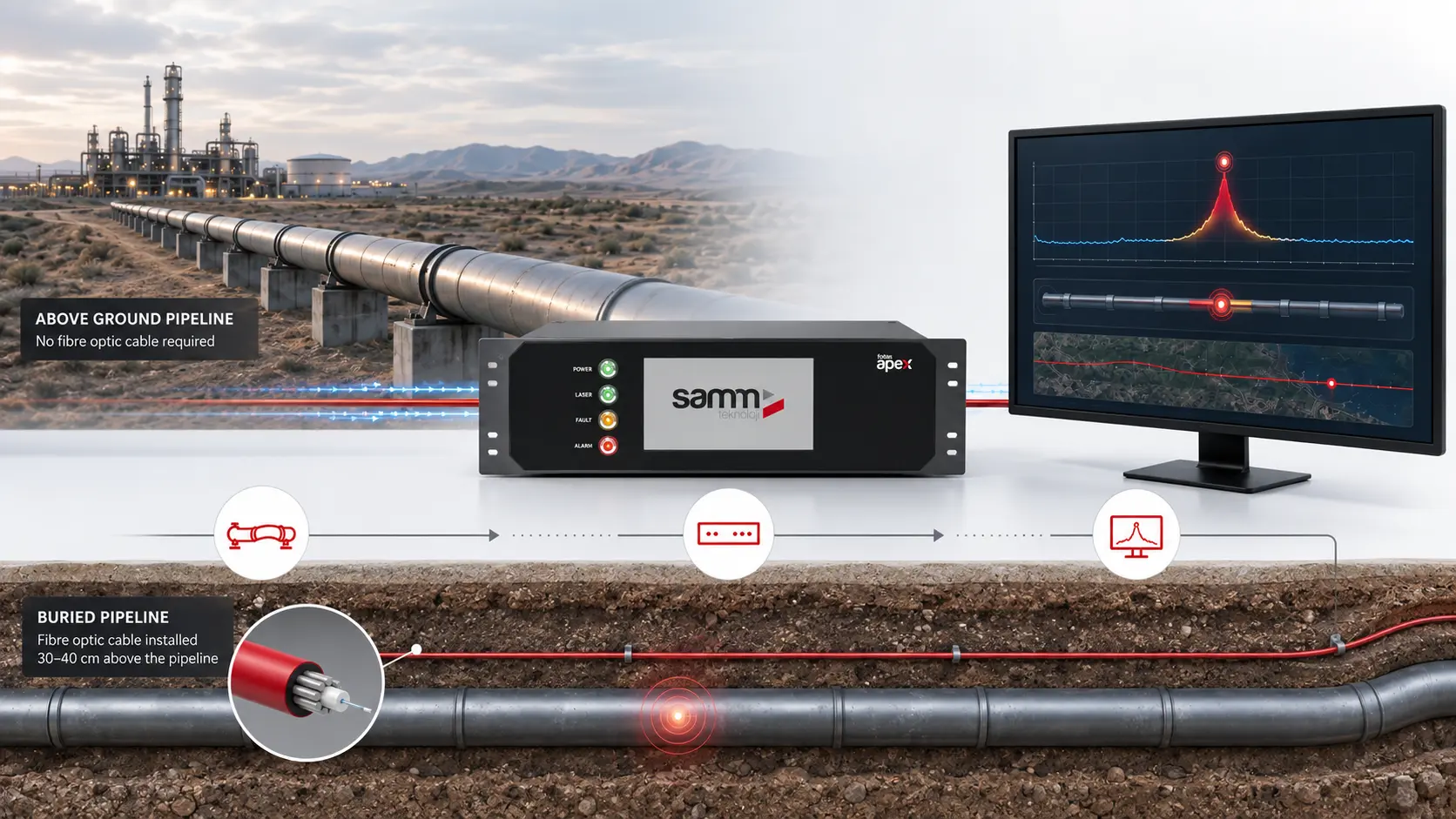
Alarm thresholds and zone settings should be configured according to the normal operating conditions, credible thermal hazards and required response strategy of each monitored area. Localization performance depends on sensing range, spatial resolution, measurement settings, cable placement, thermal coupling and environmental conditions.
Learn how Raman backscatter and time-of-flight analysis produce spatially resolved temperature information.
Distributed temperature measurement along the installed sensing cable rather than only at isolated detector positions.
Measured temperature data, alarm position and historical temperature trends can be evaluated together.
Different thresholds and alarm criteria can be assigned to individual sections of the sensing route.
The sensing fiber requires no electrical circuit along the monitored route. Active system equipment remains powered.
Optical sensing is immune to electromagnetic interference around cables, transformers, switchgear and motors.
Cable construction can be selected according to temperature, fire performance, moisture and mechanical requirements.
Cable placement, alarm zoning and response logic must be adapted to the thermal risks of each application.
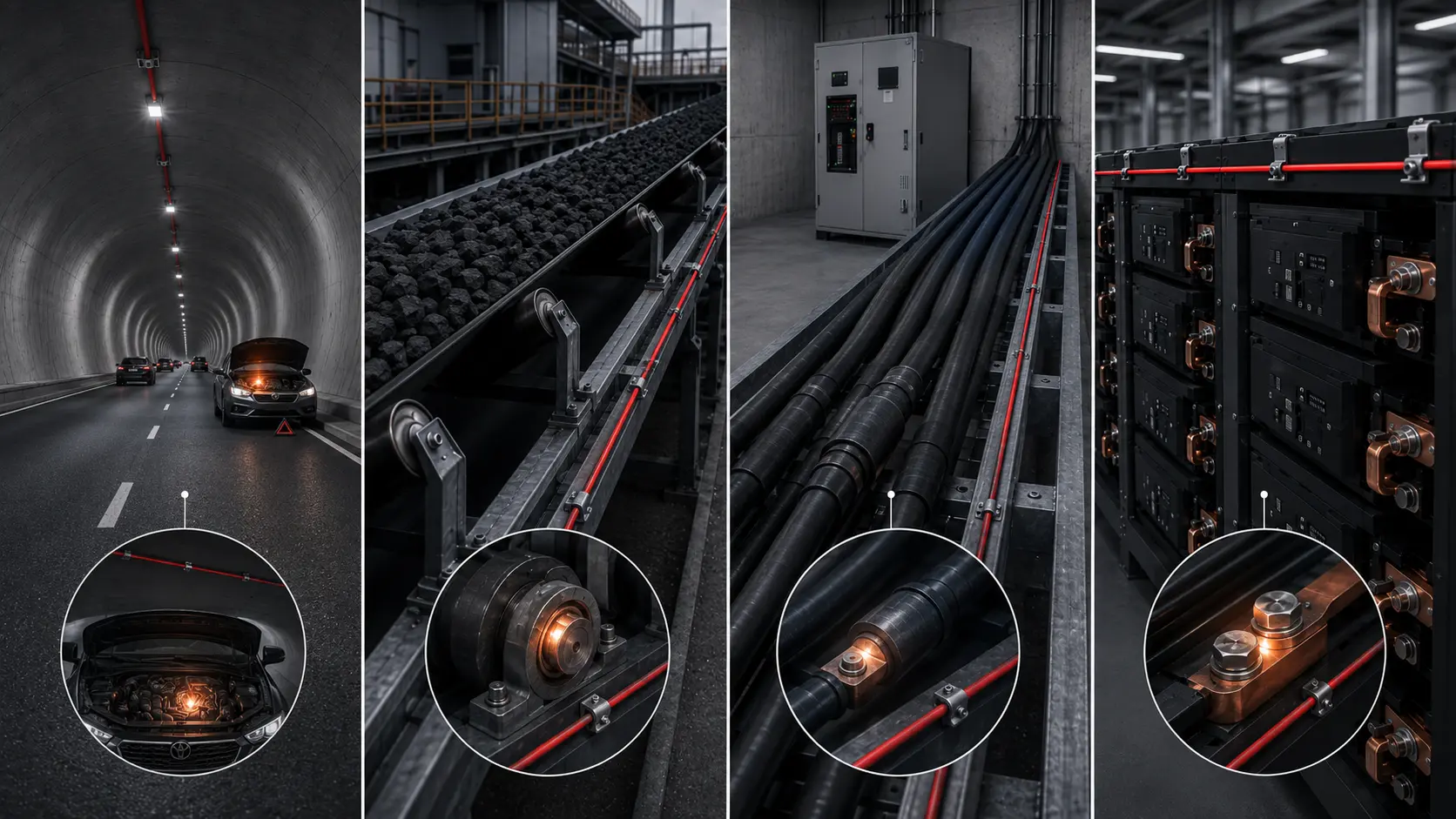
DTS can support linear heat detection, alarm localization and integration with tunnel management, ventilation, smoke extraction, suppression and emergency response systems.
Monitoring of selected conveyor sections where abnormal heating may be associated with bearings, rollers, friction, drive systems or material accumulation.
Cable trays, trenches, joints, terminations, busbars, switchgear, transformers, substations and UPS systems.
Distributed thermal monitoring along battery racks, power interfaces, cable connections, HVAC routes and container zones.
High-bay storage, conveyors, sorting systems, charging areas, cable routes, cold storage and concealed service spaces.
DTS can be applied along cable routes, busways, power connections, UPS areas, battery rooms, cable vaults and remote equipment shelters.
The Battery Management System remains responsible for cell-level electrical monitoring and control. DTS provides an additional distributed temperature monitoring layer.
A DTS-based system may interface with Fire Alarm Control Panels, Building Management Systems, SCADA, Distributed Control Systems, Tunnel Management Systems, ventilation, smoke extraction, suppression, CCTV and alarm-management platforms.
Detected events may support operator notification, visualization, equipment isolation, shutdown, ventilation control or other predefined responses.
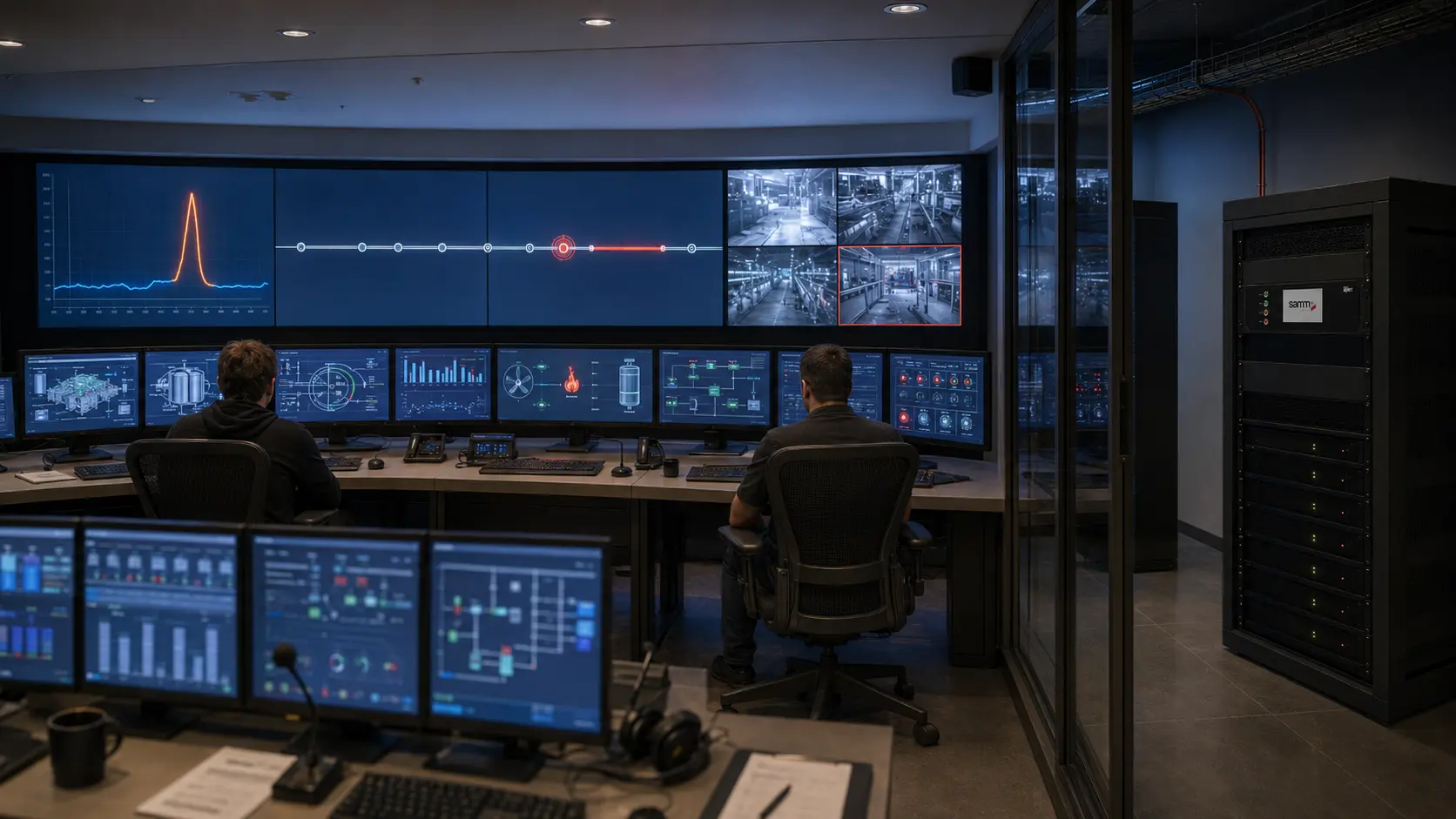
Effective design depends on sensing cable placement, thermal exposure, alarm criteria, zoning, cable construction, redundancy, controller location, power protection and commissioning.
The system should be engineered around the actual thermal hazard and required operational response, not around a standard installation diagram.
FOTAS APEX is a Distributed Temperature Sensing solution developed for fiber optic linear heat detection and fire detection applications.
Depending on the approved product configuration, available functions may include distributed temperature measurement, fixed-temperature and rate-of-rise alarms, configurable alarm zones, alarm localization, visualization, relay outputs and communication interfaces.
Product specifications, performance values, localization capability and compliance statements must be confirmed using the latest approved FOTAS APEX datasheet and certification documentation.

Contact the FOTAS engineering team to evaluate sensing cable routing, monitoring zones, system integration and project requirements.