


Electrical Faults
Abnormal heating in cable trays, busbars, switchgear, transformer connections and high-current systems.

Fiber Optic Monitoring for Manufacturing Plants, Process Equipment, Conveyors and Electrical Systems
Explore Industrial MonitoringManufacturing plants and heavy industrial facilities bring electrical power, moving machinery, process heat and combustible materials into the same operating environment.
A single overheating bearing, cable connection or conveyor friction point may affect an entire production line. The challenge is to detect the developing condition and locate it before it causes equipment damage or an unplanned shutdown.
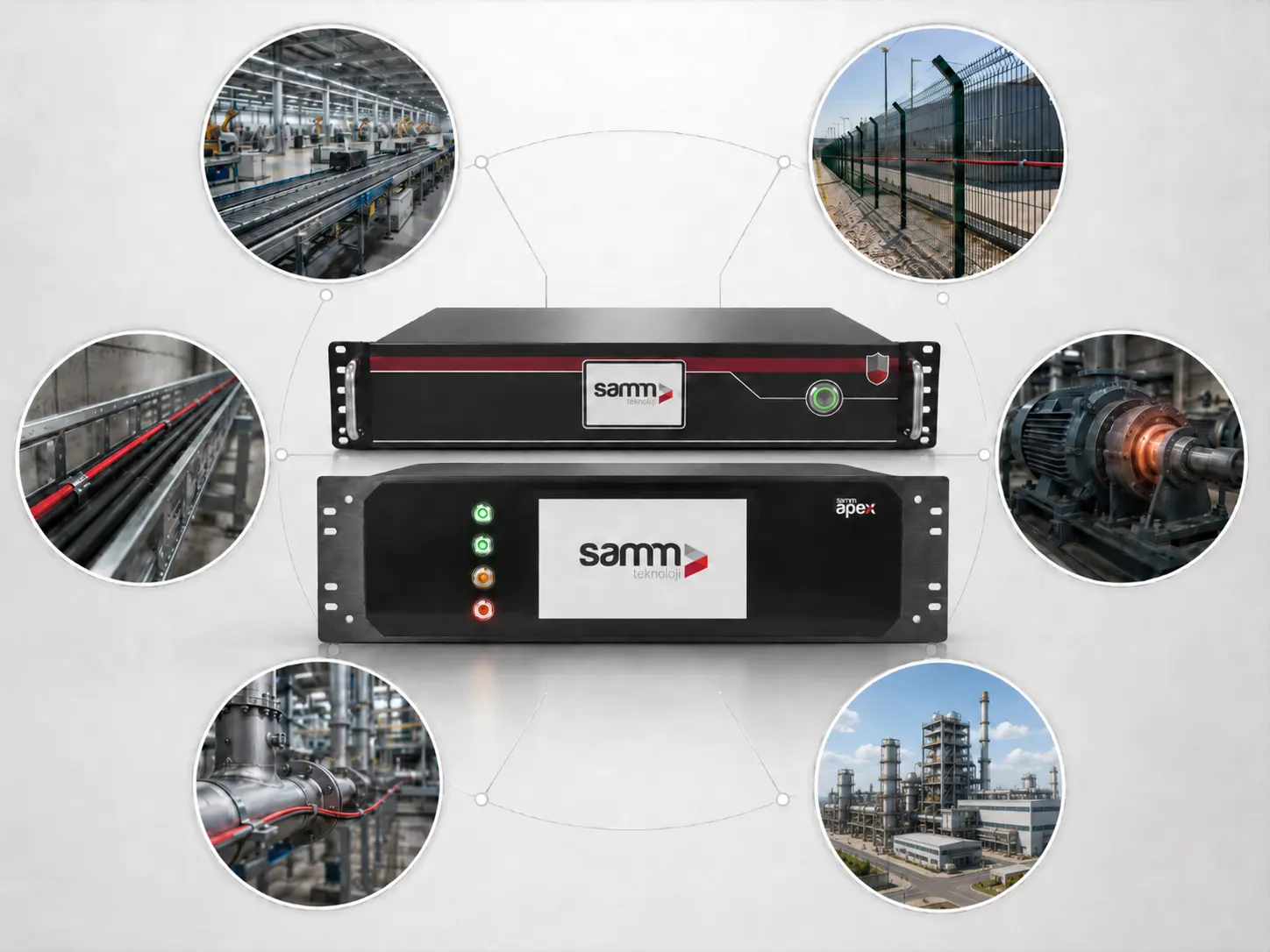
FOTAS provides Distributed Temperature Sensing (DTS) and Distributed Acoustic Sensing (DAS) solutions for industrial infrastructure.
DTS provides linear heat detection and continuous thermal trending. DAS supports perimeter security and the protection of external communication, power and utility routes.
Industrial facilities rarely offer ideal conditions for conventional detectors. High ceilings, complex layouts and strong process airflow can create monitoring gaps. Dust, oil mist, steam, vibration, humidity and corrosive atmospheres also increase detector maintenance and may shorten equipment life.
Abnormal heating in cable trays, busbars, switchgear, transformer connections and high-current systems.
Thermal development around motors, turbines, compressors, bearings and production equipment.
Roller failure, belt friction, misalignment and accumulated material along conveyor systems.
Combustible dust, hydraulic fluids, packaging materials and hazardous-material storage areas.
Furnaces, kilns, hot work, chemical reactions and other processes with elevated operating temperatures.
Utility tunnels, service corridors, pipe racks and cable routes that are difficult to inspect continuously.
Continuous temperature profiling across production, electrical and storage infrastructure.
FOTAS DTS uses optical fiber as a continuous linear temperature sensor. The controller measures temperature along the sensing route and produces a thermal profile across the monitored asset or area.
Alarm logic may combine fixed temperature thresholds, rate-of-rise detection, multi-stage alarms and zone-based rules. Settings should reflect normal process temperatures, so alarms represent a meaningful change rather than ordinary production heat.
Point detectors remain useful for local rooms and selected equipment. DTS complements them by adding continuous thermal coverage along extended routes and large industrial areas.
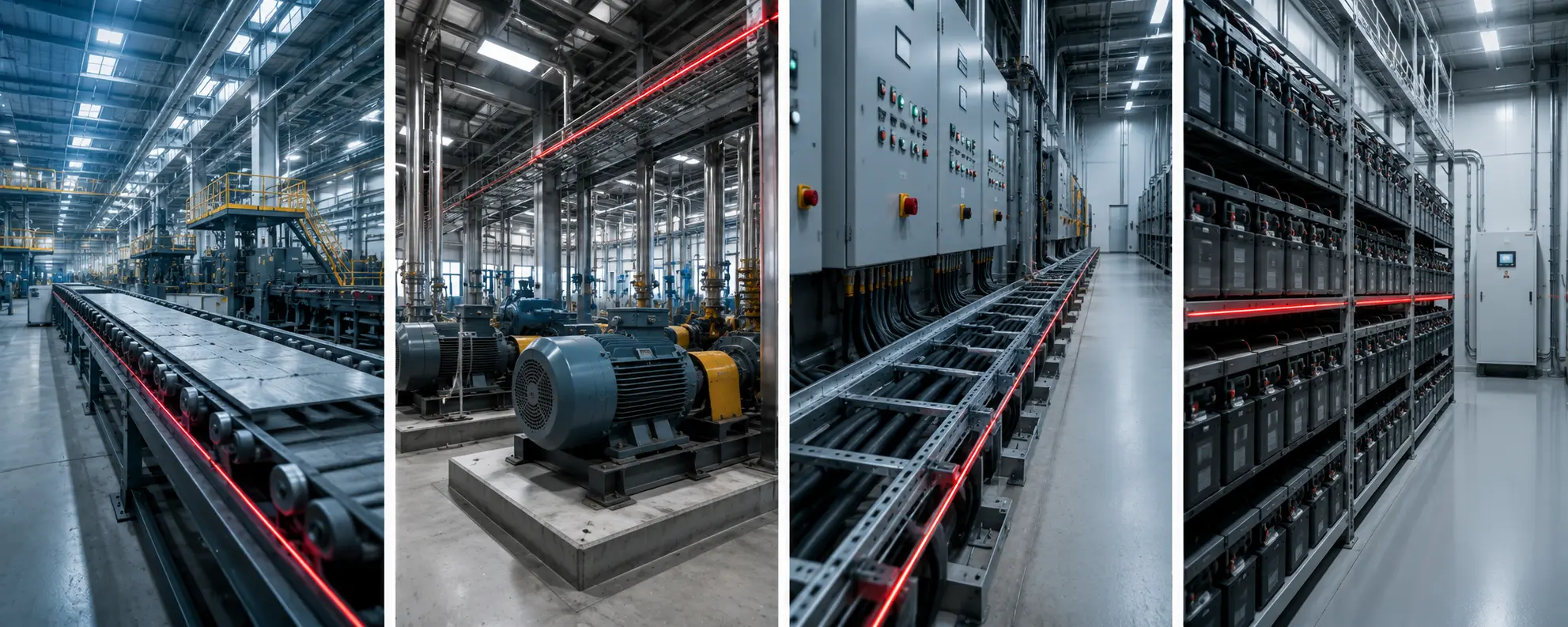
One sensing platform can cover several types of thermal risk across the same industrial facility.
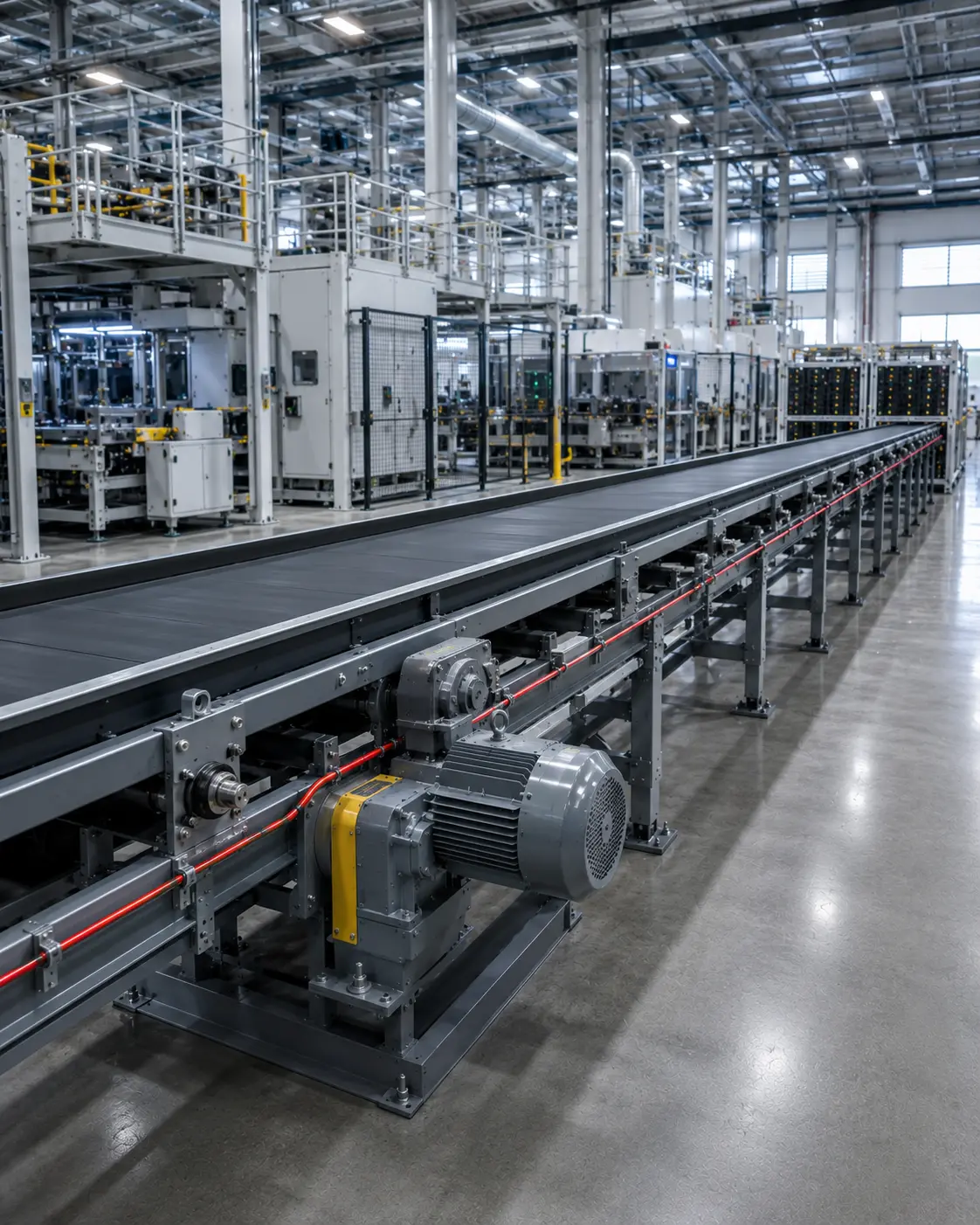
DTS detects temperature development associated with roller failure, bearing overheating, belt friction, motors, compressors and hydraulic systems.
Cable trays, busbars, switchgear, MCC rooms, transformer connections and UPS systems are monitored for localized heating and abnormal load conditions.
Linear temperature monitoring supports large storage areas, hazardous-material zones, battery systems and industrial EV charging infrastructure.
Temperature trending does not replace vibration analysis, oil analysis or electrical testing. It adds continuous thermal information that supports maintenance decisions.
Distributed acoustic and vibration monitoring for plant boundaries and external infrastructure routes.
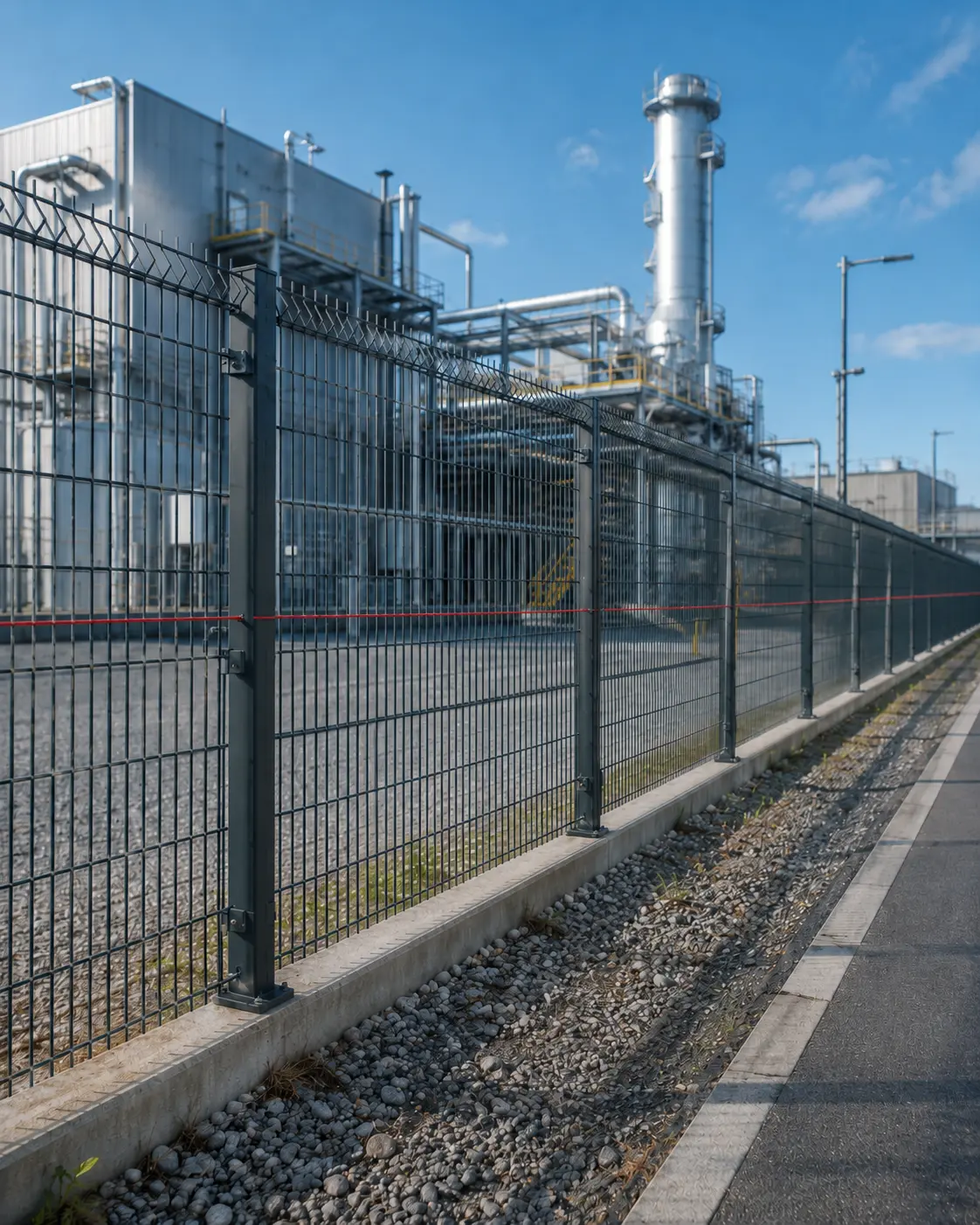
FOTAS DAS converts optical fiber into a distributed acoustic and vibration sensor. Fence-mounted, buried and hybrid installations support plant perimeter security.
The same approach protects external communication, power and utility routes against digging, construction activity and physical interference.
AI-based analytics classify walking, vehicle movement, digging, climbing and fence cutting. Event location data helps direct cameras, security teams or patrols toward the affected section.
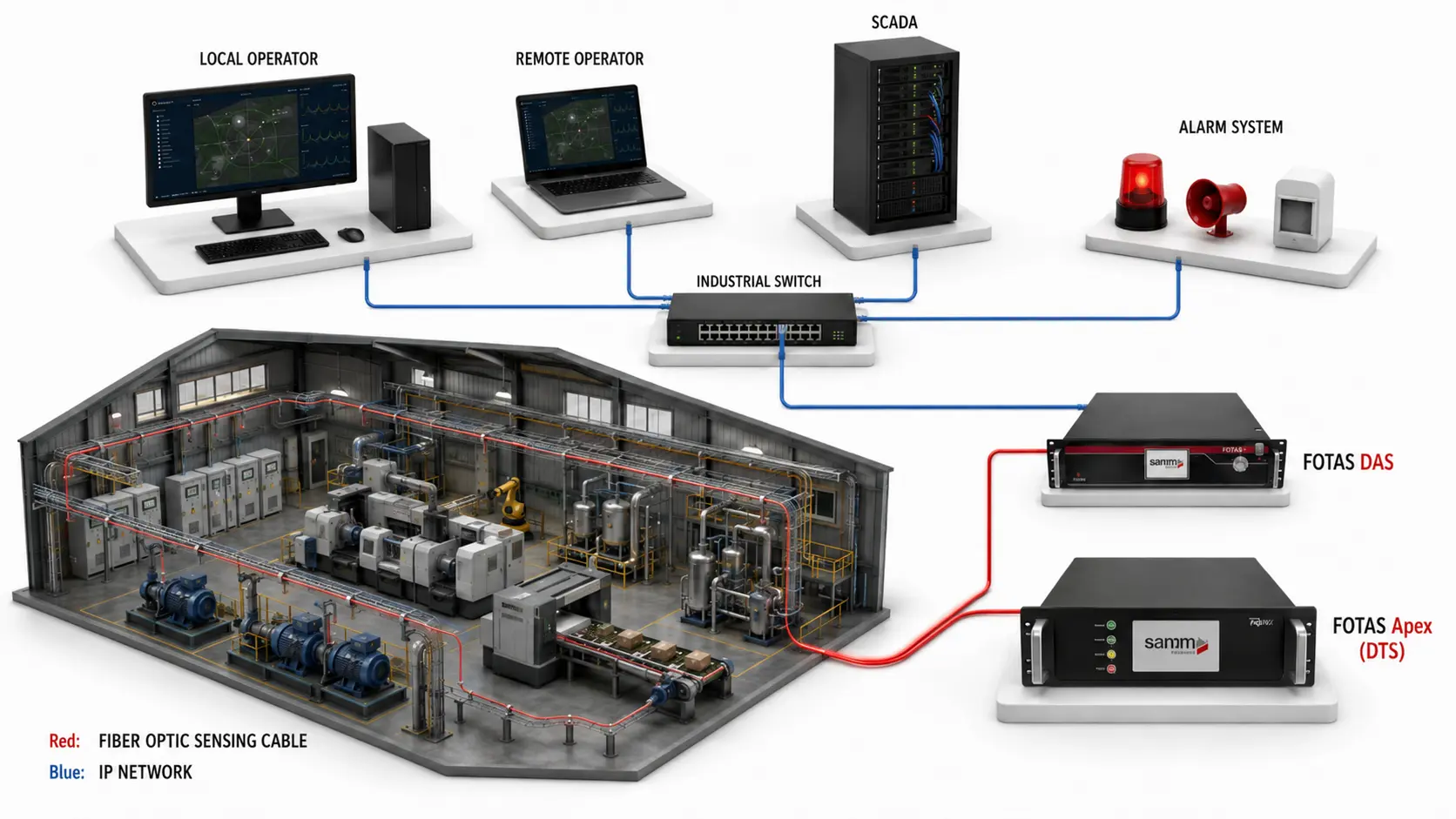
DTS and DAS control units are installed in secure control rooms or protected enclosures. Monitoring data connects to fire alarm, SCADA, BMS, process control, CCTV and emergency shutdown systems.
The sensing fiber requires no electrical power along the monitored route and is immune to electromagnetic interference. This is useful around motors, high-current systems and electrically noisy equipment.
Hazardous areas still require the complete installation, including control equipment, connections and enclosures, to comply with the relevant protection and certification requirements.
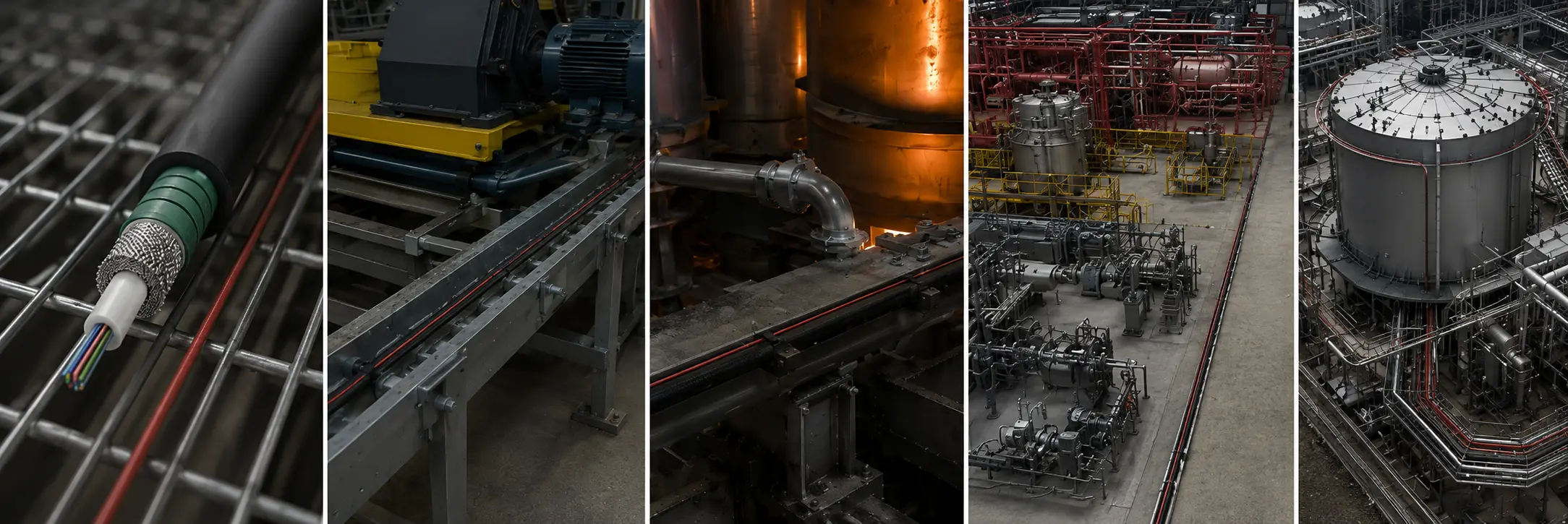
Cable construction, routing and alarm design must match the operating environment and the actual process risk.
Talk to our engineering team about a FOTAS DTS or DAS configuration for manufacturing plants, process equipment, conveyors and electrical infrastructure.