


Excavation Near Fiber Routes
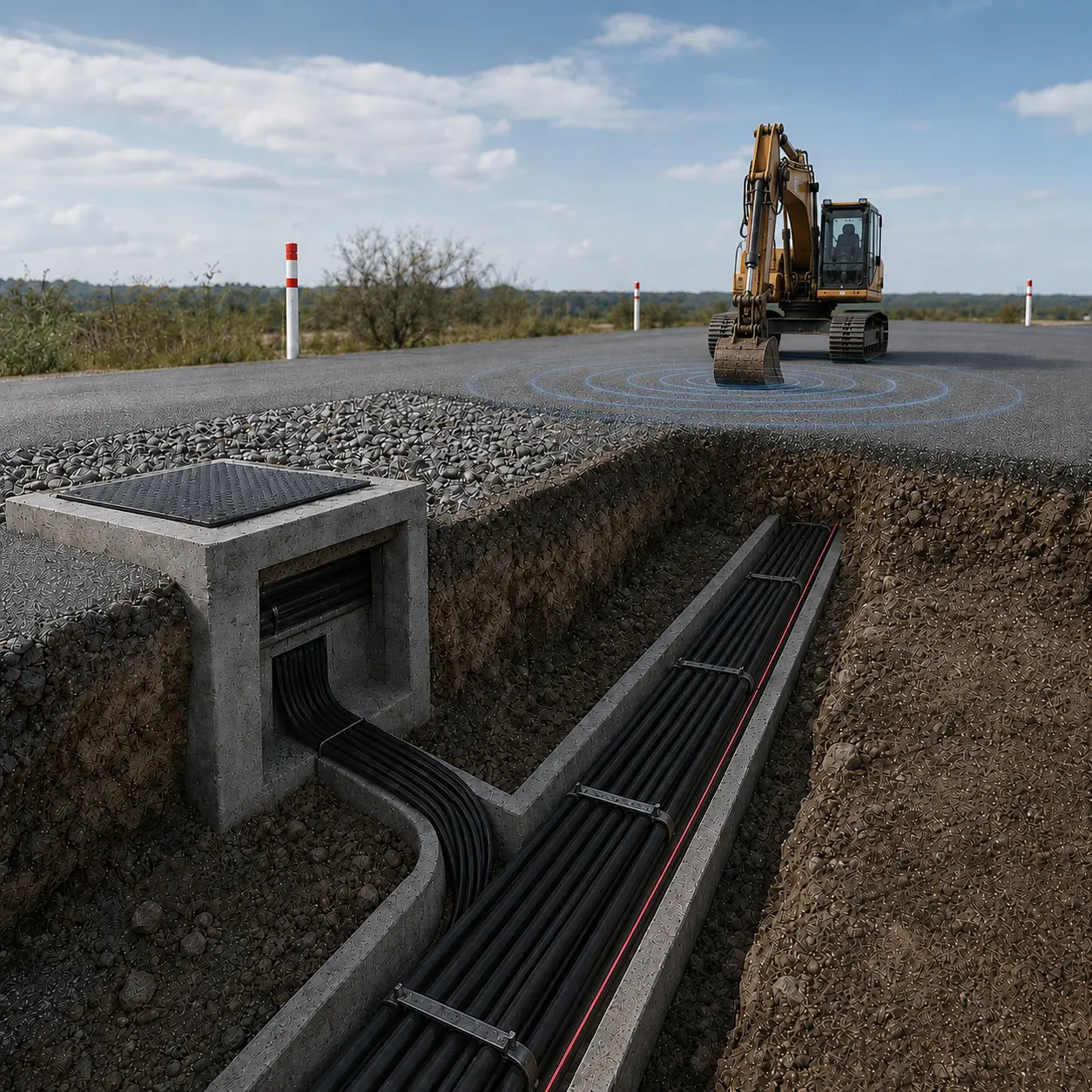
Construction machinery, digging and ground disturbance close to buried long-haul or metro infrastructure.

Fiber Optic Monitoring for Long-Haul Routes, Metro Networks, Central Offices and Landing Stations
Telecommunications networks depend on physical infrastructure extending far beyond the central office. Long-haul and metro fiber corridors, underground ducts, cable vaults, edge sites, remote shelters and landing stations all contribute to service continuity.
Construction activity, excavation, local overheating or unauthorized access may develop around this infrastructure before network performance changes.
FOTAS uses Distributed Acoustic Sensing (DAS) to detect acoustic and vibration activity along fiber routes and Distributed Temperature Sensing (DTS) to provide continuous thermal information around selected cables, equipment spaces and critical network nodes.
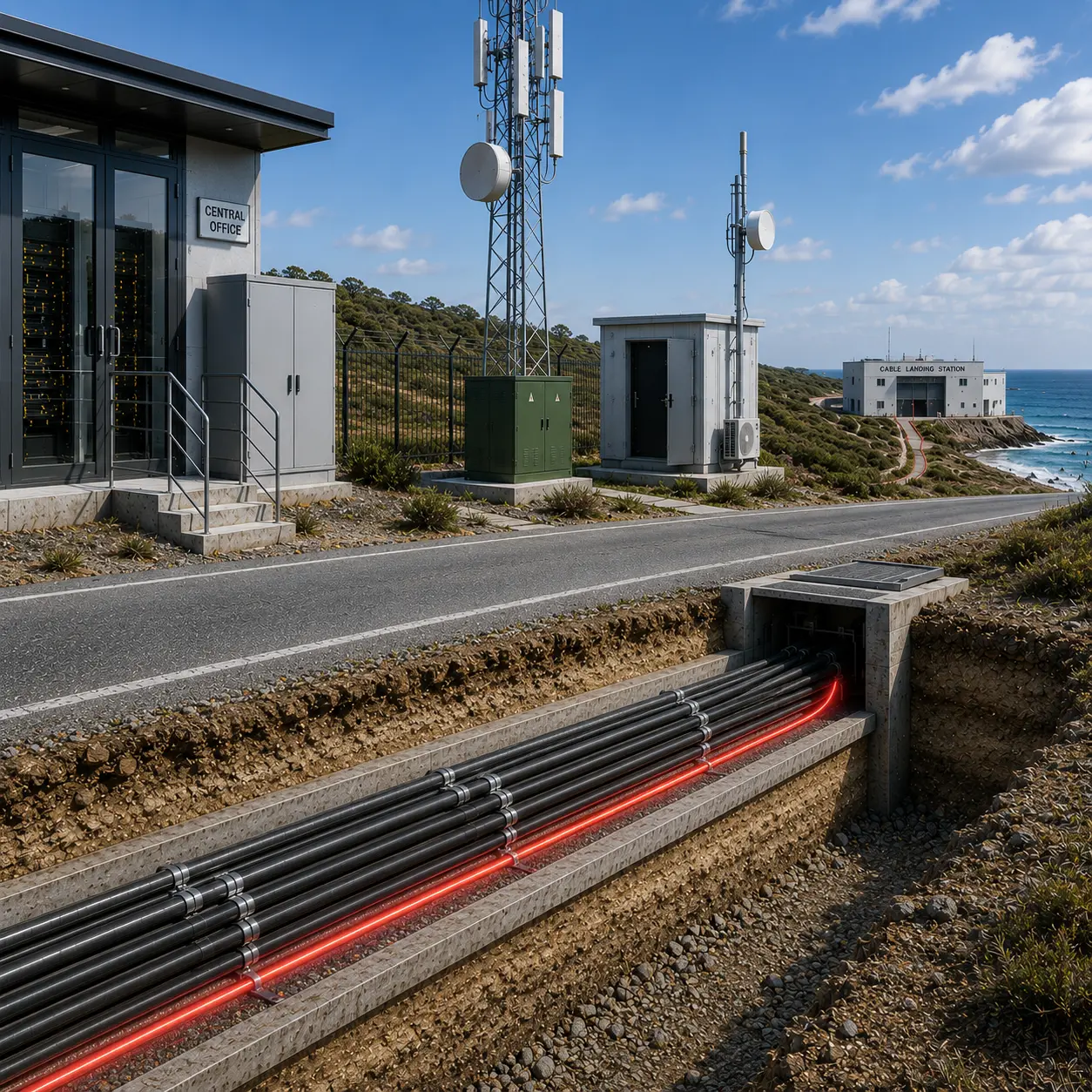
Buried routes and remote network facilities often have limited direct supervision, while a single cable incident may affect multiple services and customers.
Operators therefore need information about both physical activity around the route and thermal conditions at protected network assets.
Construction machinery, digging and ground disturbance close to buried long-haul or metro infrastructure.
Intentional or accidental activity around ducts, handholes, cable chambers and protected corridors.
Abnormal heating and developing fire conditions in underground vaults, ducts and concentrated cable areas.
Thermal faults or cooling problems inside remote shelters, edge facilities and equipment rooms.
Unauthorized activity near coastal approaches, cable entry corridors and restricted network facilities.
Long and geographically distributed routes that cannot be inspected continuously through field patrols alone.
Distributed detection of physical disturbance along long-haul, metro and access network corridors.
FOTAS DAS converts a suitable optical fiber into a distributed acoustic and vibration sensor. The interrogator sends laser pulses through the fiber and analyzes changes in coherent Rayleigh backscatter to identify disturbances along the route.
For long-haul and metro networks, DAS supports detection of digging, construction activity, vehicle movement and other third-party events near buried infrastructure.
Alarm zones and event localization help operators direct field teams toward the affected corridor instead of searching an extended route without location information.
OTDR, transmission alarms and network management systems assess optical loss, reflections, connection quality, fiber breaks and service performance.
DAS monitors physical disturbance around the route, including digging, construction and vehicle activity that may threaten the cable.
DAS does not replace OTDR or network management systems. It adds a physical monitoring layer and may provide warning before cable damage occurs, depending on route coupling, event strength, distance and classification settings.
Continuous temperature information for cable spaces, equipment rooms and critical network nodes.
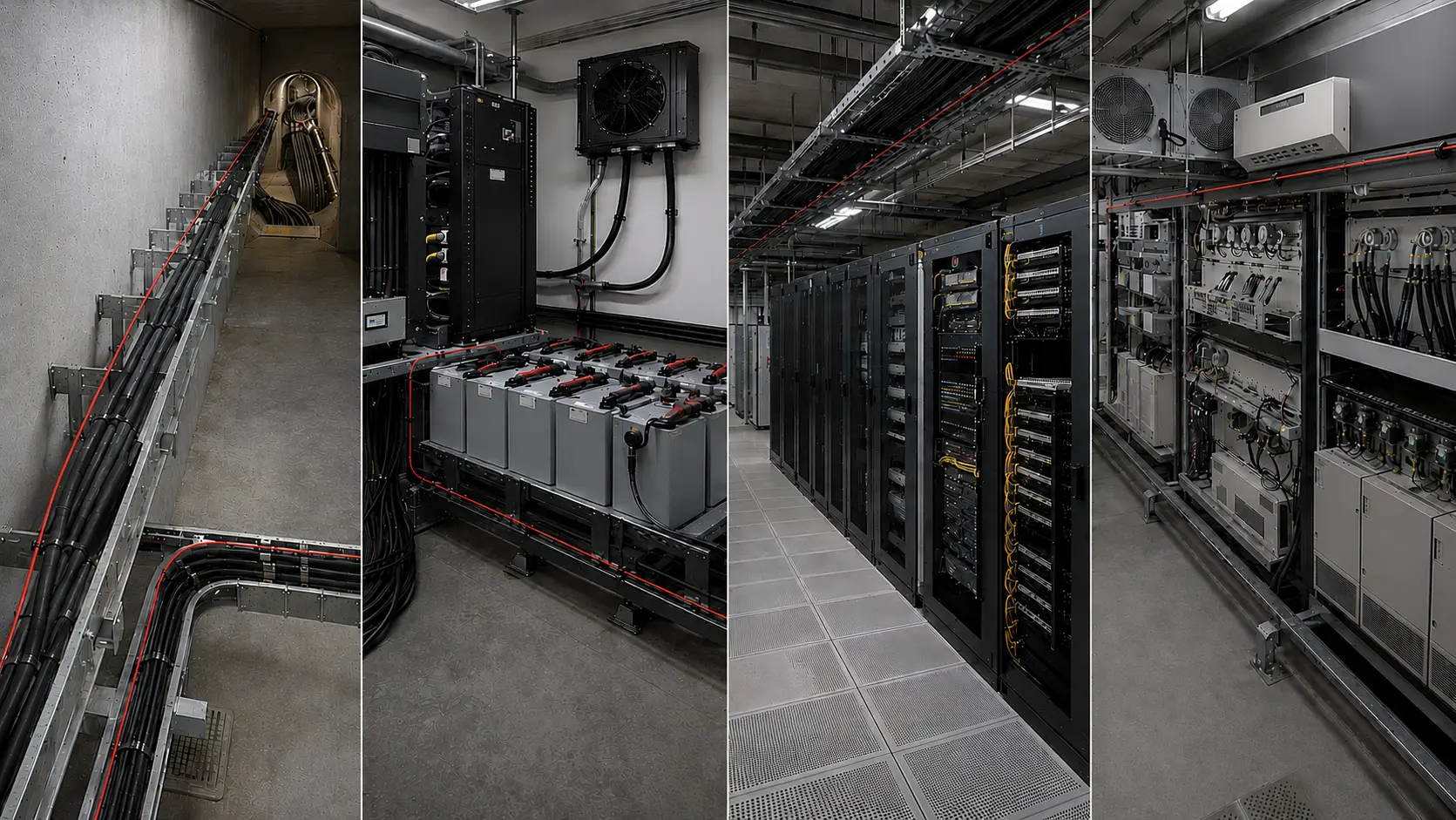
FOTAS DTS uses optical fiber as a continuous linear temperature sensor. The interrogator analyzes Raman backscatter to calculate temperature along the sensing route and identify the location of abnormal thermal events.
In telecom environments, sensing routes can cover cable vaults, underground ducts, remote shelters, equipment rooms, landing stations and selected critical network nodes.
Temperature profiles support linear heat detection, hot spot monitoring and the identification of abnormal environmental or equipment conditions.
DTS does not replace smoke detection, electrical protection or equipment diagnostics. It provides a continuous thermal layer with alarm location information.
A route-to-site monitoring strategy for infrastructure with both external security and internal thermal risks.
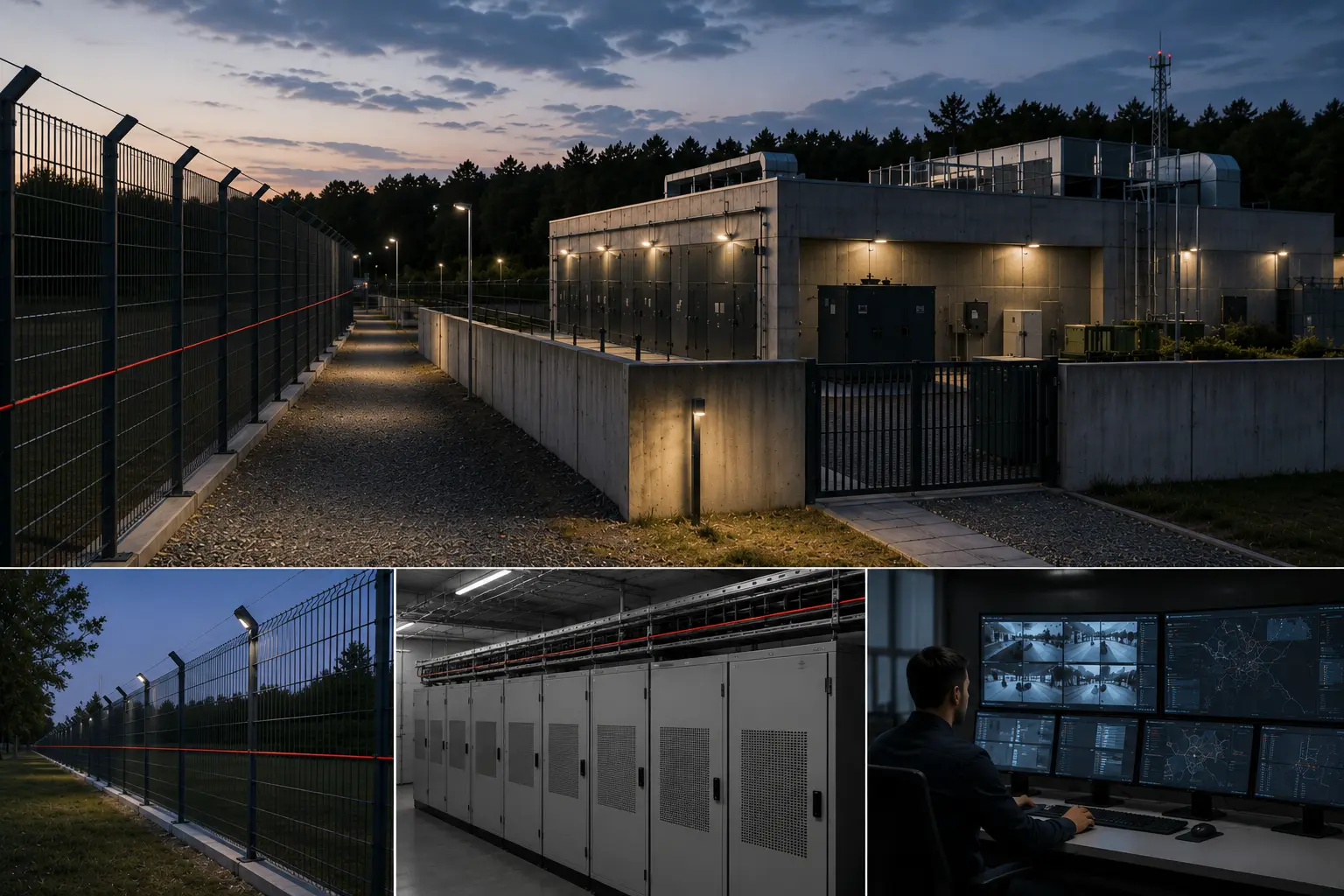
DAS may be deployed along fences, buried approaches or protected entry corridors to identify vehicle activity, digging, fence interference and unauthorized movement.
DTS can monitor selected cable routes, cable entry spaces and equipment areas for abnormal temperature development and linear heat events.
External security events and internal thermal alarms can be presented through the relevant security, building or network operations platform.
A landing station, metro route and remote shelter do not present the same engineering problem. Fiber placement, alarm zoning and integration must follow the risk and operating model of each location.
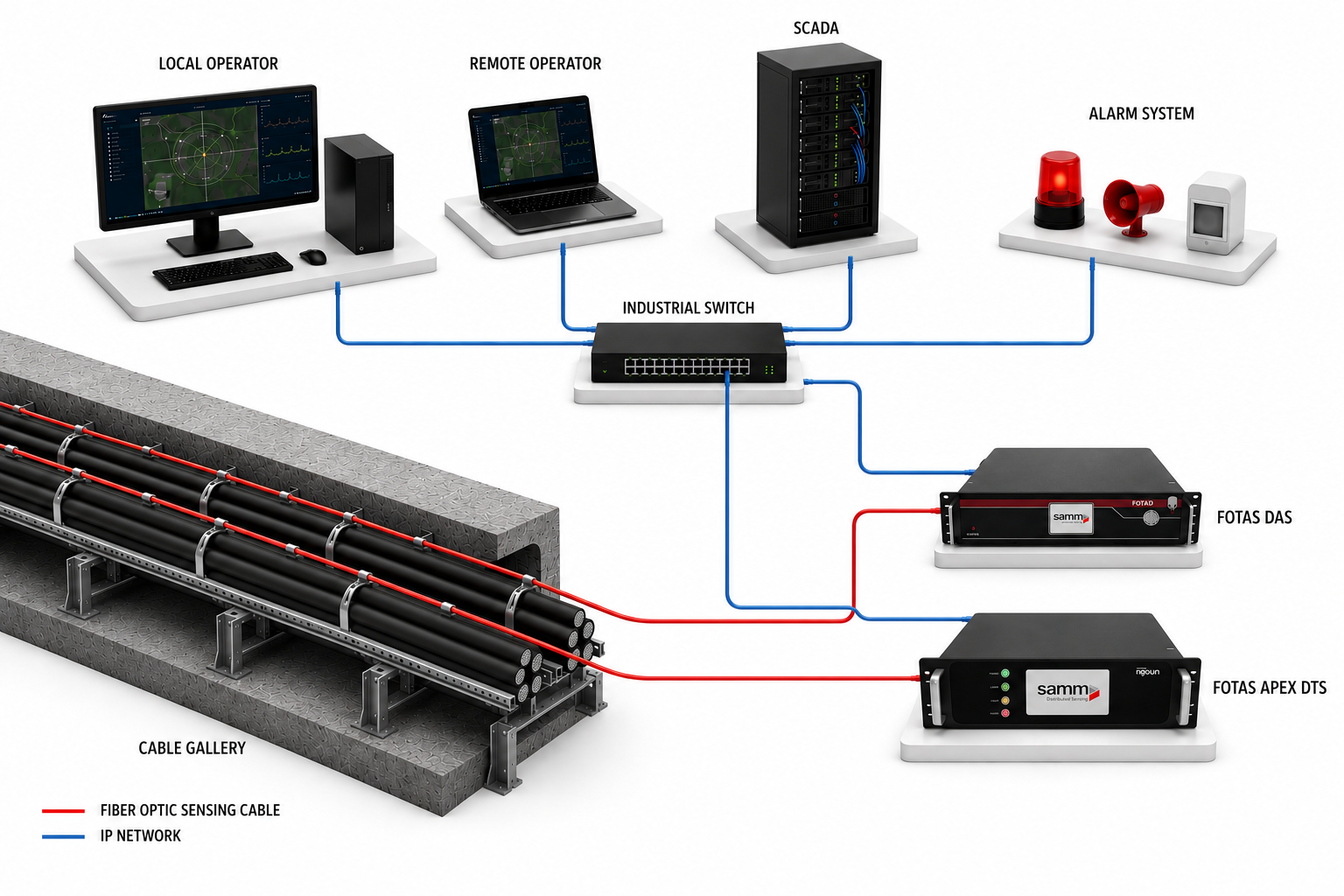
DAS and DTS control units are installed in central offices, landing stations, control rooms or protected field shelters. Monitoring data can connect to network management, GIS, security, access control, CCTV, fire alarm and building management platforms.
The sensing fiber is passive, requires no electrical power along the monitored route and is immune to electromagnetic interference.
This does not mean that the complete system operates without power. Interrogators, servers, network interfaces and associated equipment require electrical power, environmental control and suitable installation protection.
A suitable spare or dedicated fiber may be allocated depending on the sensing technology, route condition, optical budget and required performance. Fiber allocation must be confirmed during detailed system design.
Talk to our engineering team about a FOTAS DAS or DTS configuration for long-haul routes, metro networks, central offices, remote sites and landing stations.