


PV Thermal Anomalies
Abnormal heating around modules, string cabling and interconnections caused by degradation, mismatch, shading or soiling.

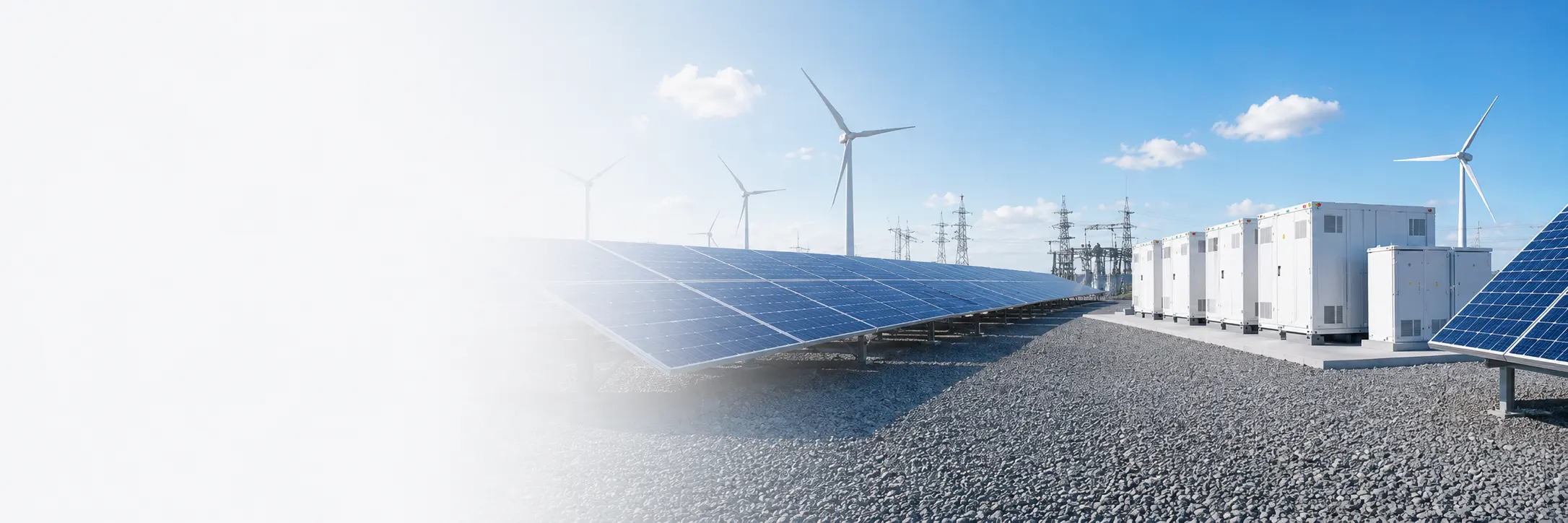
Fiber Optic Monitoring for Solar PV Farms, Battery Storage, Power Cables and Secure Energy Sites
Explore Renewable MonitoringRenewable energy sites distribute electrical equipment across large and often remote areas. Solar modules, DC cabling, combiner boxes, inverter stations, battery containers and grid connections must operate together under different thermal and environmental conditions.
A fault may begin at one connector, cable section or battery rack and remain difficult to locate until performance drops or a wider safety event develops.
FOTAS provides Distributed Temperature Sensing (DTS) and Distributed Acoustic Sensing (DAS) for renewable energy infrastructure.
DTS measures temperature continuously along the sensing fiber. DAS detects acoustic and vibration activity around the cable for perimeter and infrastructure route protection.
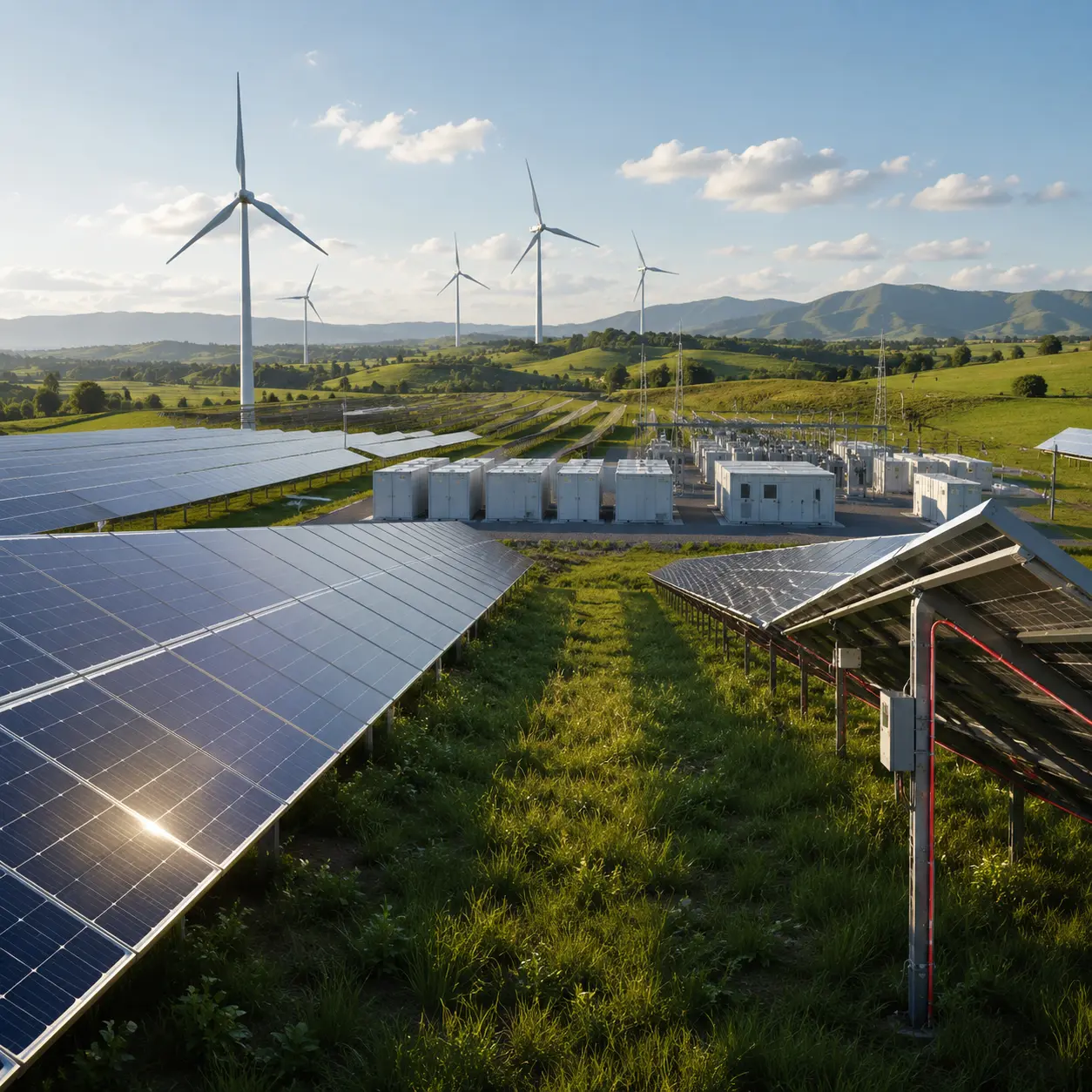
Rooftop and utility-scale installations create different operating conditions. Rooftops combine confined cable routes with proximity to buildings and occupants. Solar farms and storage sites cover large areas, often with limited on-site personnel and continuous exposure to UV, dust, moisture and temperature extremes.
Abnormal heating around modules, string cabling and interconnections caused by degradation, mismatch, shading or soiling.
Resistive heating at loose, damaged or degraded connectors, junction boxes and cable terminations.
Overheating terminals, load imbalances and cooling-system faults inside critical conversion equipment.
Localized temperature rise, cooling failure and developing thermal events across battery racks and containers.
Thermal effects caused by overloading, insulation damage, joints, soil conditions or installation problems.
Intrusion, vehicle activity, digging and interference around lightly staffed sites and external infrastructure routes.
Continuous thermal profiling across panel rows, electrical connections and inverter infrastructure.
FOTAS DTS uses optical fiber as a continuous linear temperature sensor. The controller sends laser pulses through the fiber and analyzes Raman backscatter to calculate temperature along the sensing route.
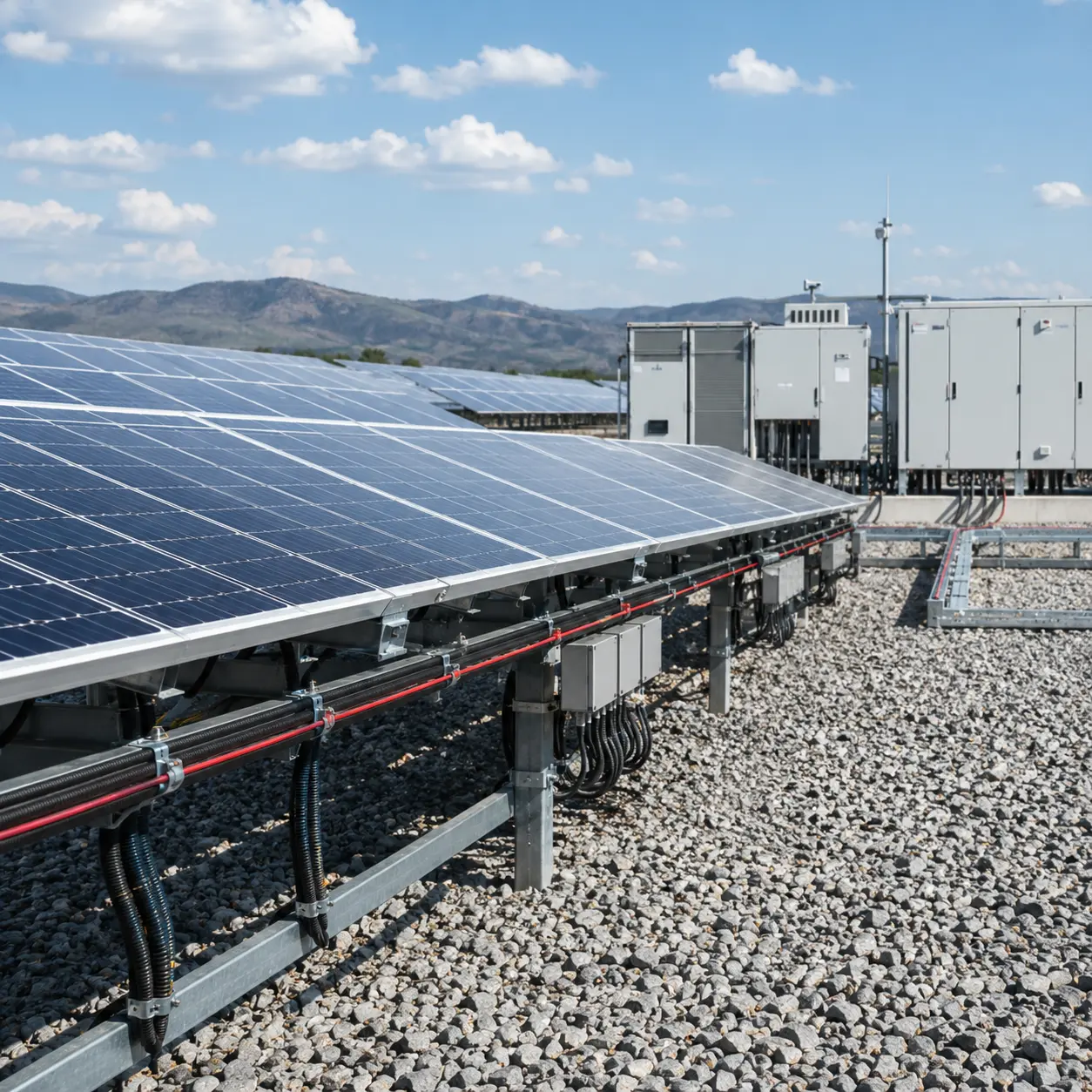
The fiber may follow panel rows, string cabling, cable trays, connectors, combiner boxes and inverter stations. On rooftop systems, it can be integrated into cable pathways or positioned behind panel rows.
At utility-scale sites, the sensing route may continue through electrical trenches and inverter areas, providing temperature information across distributed infrastructure.
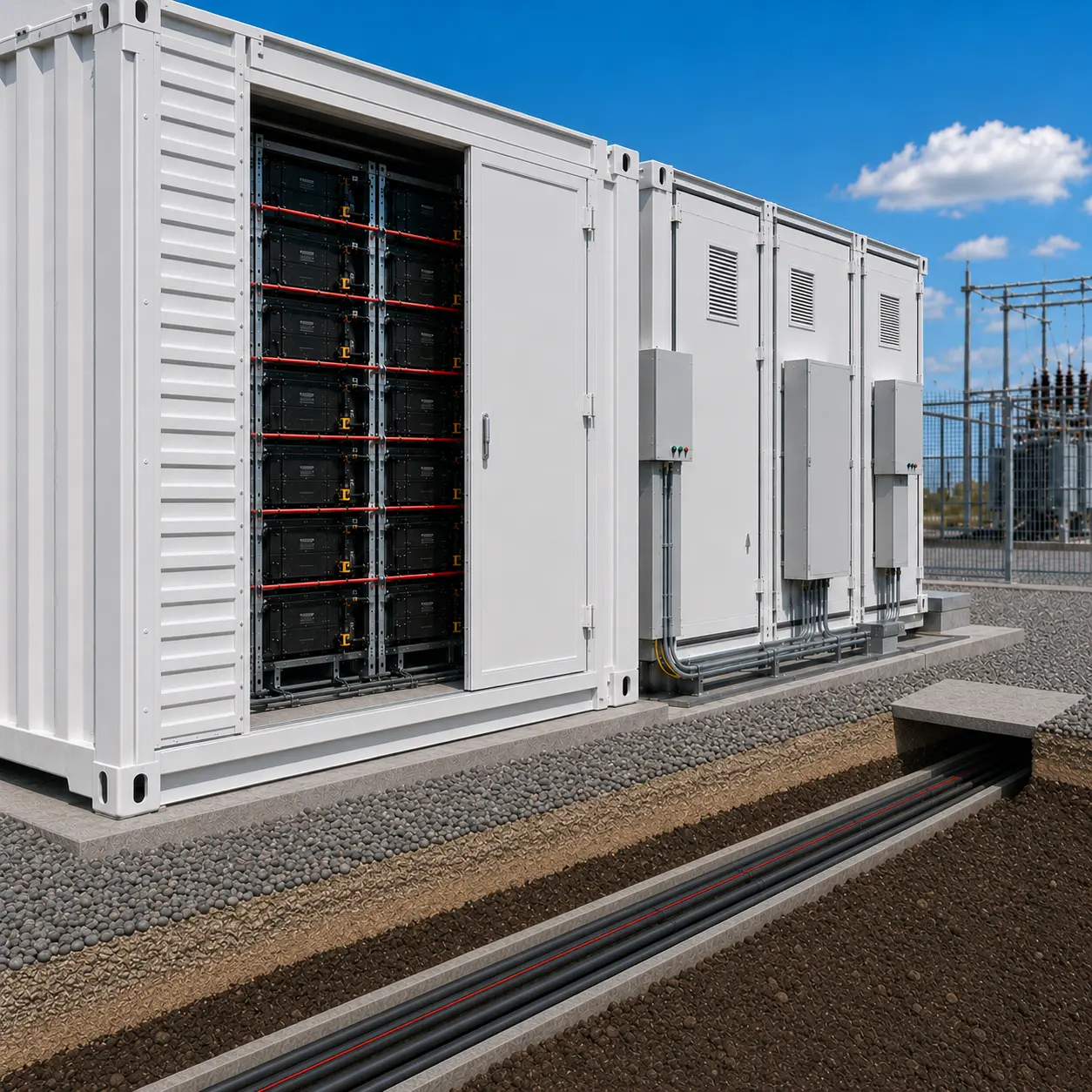
Independent thermal information for storage systems, collector cables and grid connections.
Fiber routed along battery racks, power interfaces, HVAC paths and enclosure zones provides distributed temperature information across the container.
The battery management system remains responsible for cell-level electrical control. DTS complements the BMS with an independent distributed thermal layer and may support alarms, ventilation, shutdown or suppression workflows.
DTS installed alongside or within power cable routes identifies hot spots at joints and terminations and monitors thermal stress along inaccessible sections.
Where cable design and operating procedures permit, real-time temperature data can support dynamic cable rating and more informed load decisions.
Distributed acoustic and vibration monitoring for renewable energy boundaries and external infrastructure routes.
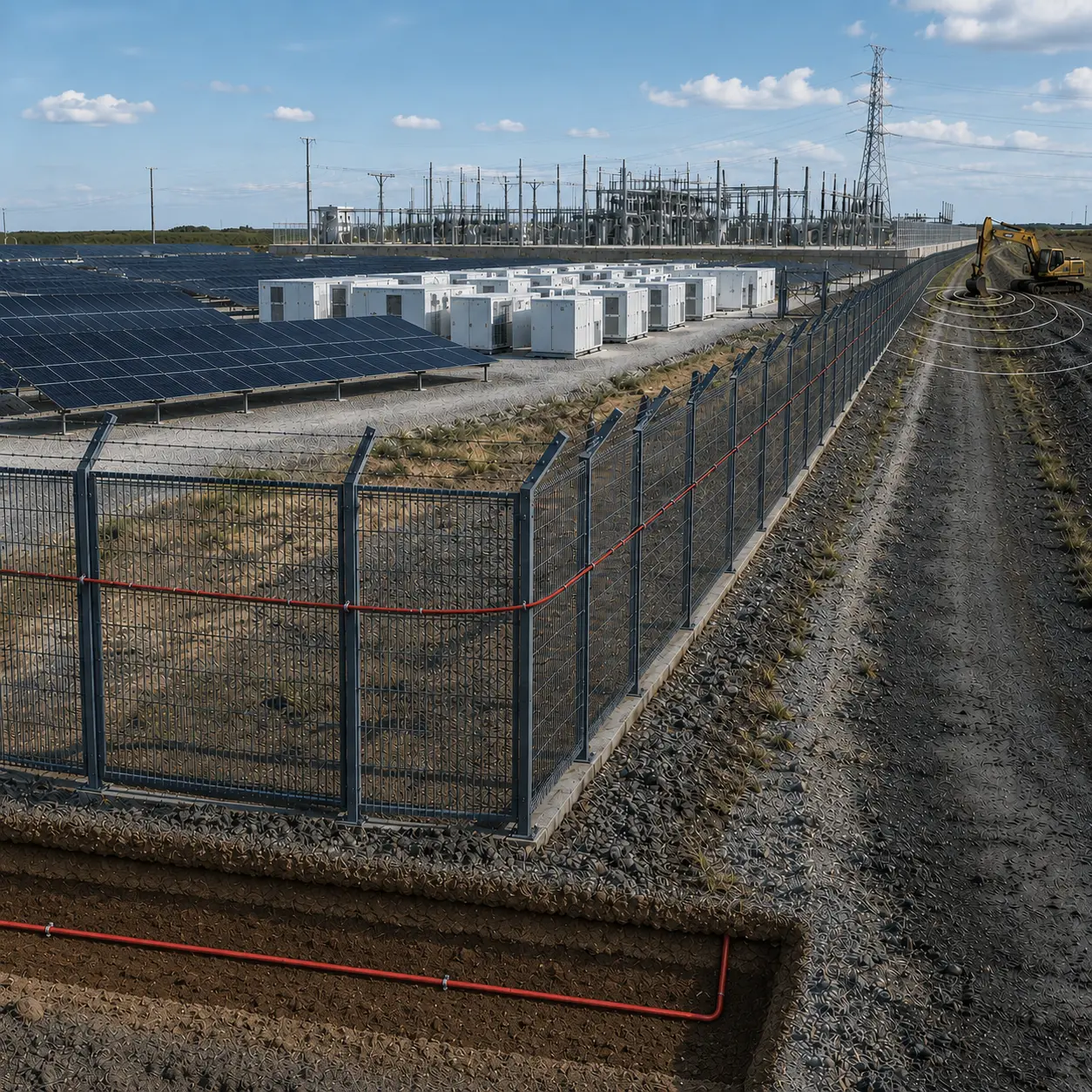
FOTAS DAS converts optical fiber into a distributed acoustic and vibration sensor. Fence-mounted, buried and hybrid installations support solar farm, BESS and substation perimeter security.
Analytics distinguish human activity, vehicle movement, digging and excavation from environmental effects such as wind, rain and wildlife.
Event location data can guide CCTV, patrol or security response. Buried sensing routes also protect external power and communication corridors where visible barriers are limited or impractical.
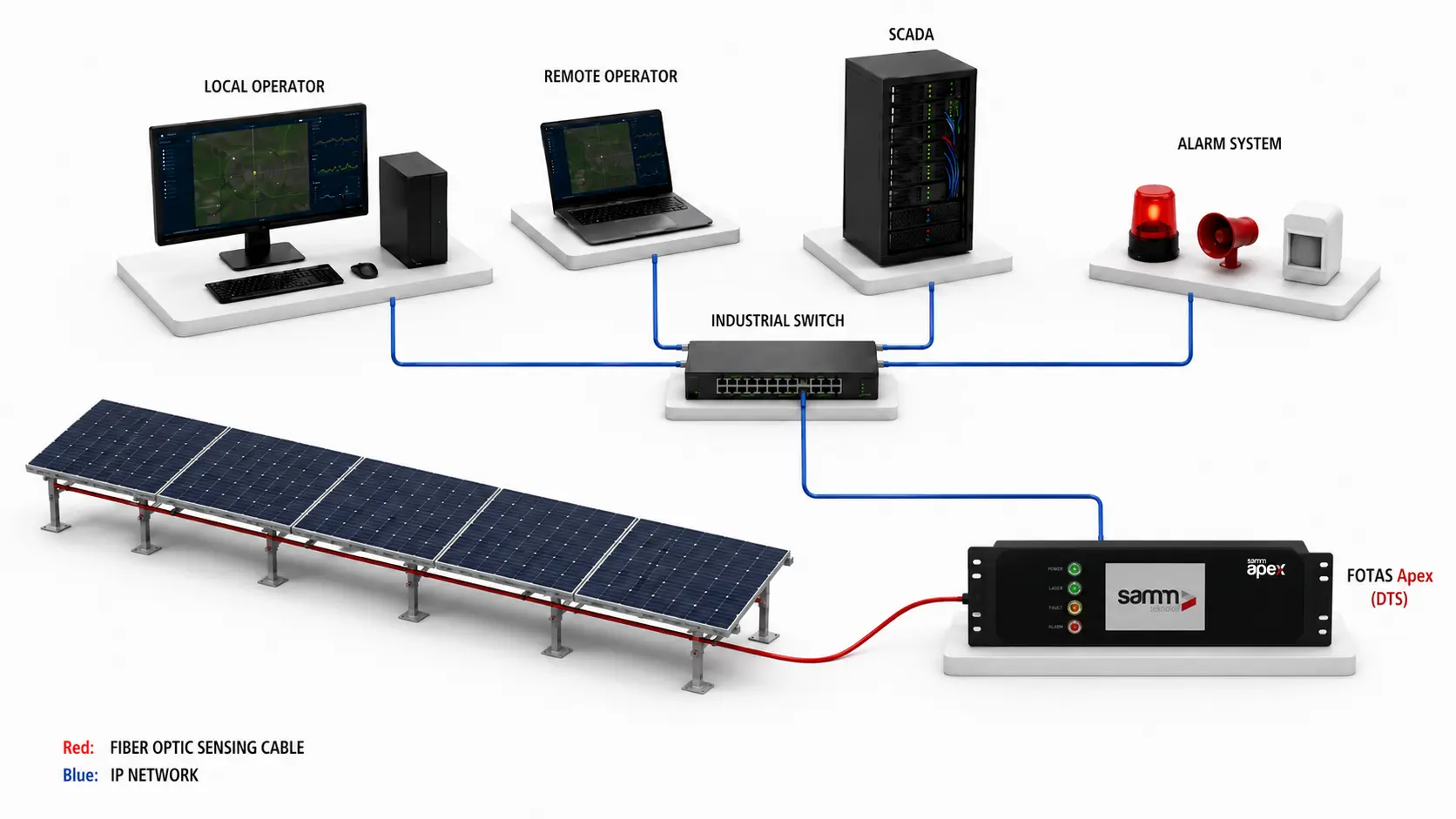
DTS and DAS control units are installed in inverter stations, control rooms, substations or protected equipment enclosures. Monitoring data connects to SCADA, EMS, BMS, fire alarm, CCTV and security platforms.
The sensing fiber requires no electrical power along the monitored route and is immune to electromagnetic interference. This is valuable around high-current cables, inverters, transformers and battery power interfaces.
Passive fiber does not remove the electrical risks associated with the complete installation. Controllers, power supplies, cable entries, communication interfaces and enclosures must comply with the voltage class, environmental rating and electrical or fire-safety requirements of the site.
Where classified or specially protected areas apply, equipment and installation methods must carry the relevant approvals for that specific environment.
Reliable monitoring depends on how the fiber is coupled to the intended asset and protected from environmental influences.
Talk to our engineering team about a FOTAS DTS or DAS configuration for solar PV farms, battery storage systems, renewable power cables and secure energy sites.