


Fence-Mounted Sensing
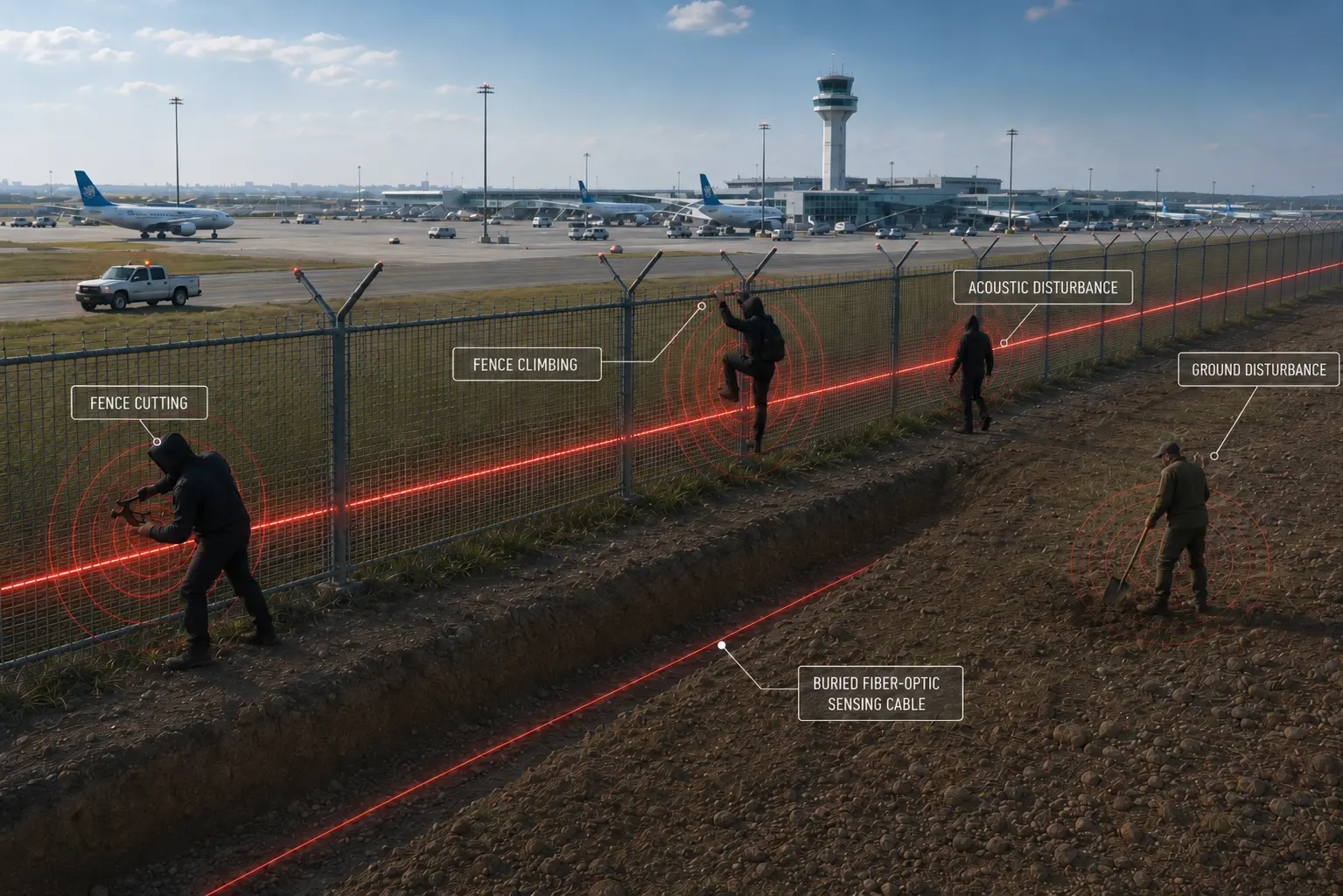
The sensing cable is attached to the physical barrier to monitor climbing, cutting, lifting and tampering activity.

Continuous fiber optic perimeter monitoring for critical infrastructure, industrial facilities, remote sites and high-security boundaries.
REQUEST A QUOTEEvery critical facility, from industrial plants and energy sites to data centers, airports, mines and high-security installations, depends on an effective perimeter protection strategy.
Fences, cameras, radar, infrared barriers and point sensors remain important parts of physical security. However, long boundaries, remote terrain, limited visibility and environmental activity can make continuous monitoring difficult.
Distributed Acoustic Sensing (DAS) adds a continuous distributed sensing layer along the protected boundary. FOTAS DAS supports real-time detection, localization and classification of physical disturbances acting on the fiber optic sensing cable.
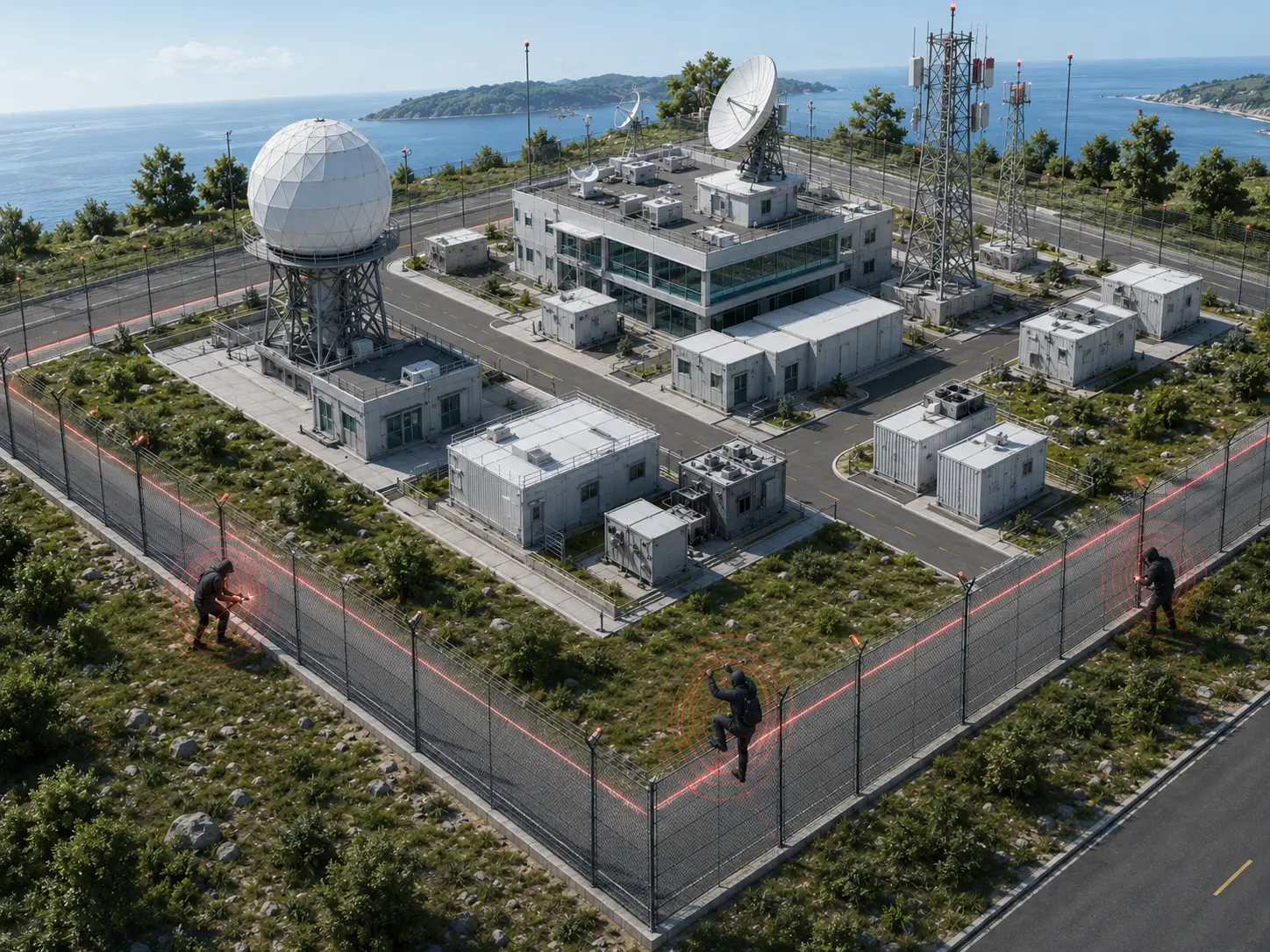
Distributed Acoustic Sensing transforms a suitable optical fiber cable into a continuous distributed vibration and acoustic sensor. A DAS interrogator sends laser pulses through the fiber and analyzes coherent Rayleigh backscatter. Vibrations acting on the sensing cable modify the returned optical signal, allowing the system to detect and localize disturbances along the protected route.
The sensing cable is attached to the physical barrier to monitor climbing, cutting, lifting and tampering activity.
A buried sensing route can support the detection of footsteps, vehicle movement, digging and other ground disturbances.
Fiber can be deployed along a protected corridor or buffer zone for distributed monitoring across extended boundaries.
Fence-mounted and buried sensing routes can be combined as part of a layered perimeter protection strategy.
The deployment method should be selected according to the physical barrier, soil conditions, expected activities, environmental exposure, cable construction and required detection strategy.
Learn how coherent Rayleigh backscatter and time-of-flight analysis provide event detection and location information.
Depending on the installation and event-classification configuration, detectable activities may include:
Detected vibration and acoustic signatures can be analyzed and assigned to configured event categories, supporting operator assessment and response.
Perimeter environments may contain vibration generated by roads, machinery, wind, rain, wildlife, maintenance work or nearby operations.
Event analytics can help distinguish human activity, vehicle movement, excavation, environmental activity and other configured event categories.
Classification can help reduce unwanted alarms and provide operators with more relevant information for verification and response.
Classification performance depends on sensing cable installation, site conditions, event signatures, system configuration and classification tuning.
FOTAS DAS can be configured for different site layouts, terrain conditions and security requirements.
Power stations, substations and energy infrastructure.
Data centers, telecom facilities and network hubs.
Airports, seaports and transportation facilities.
Refineries, processing plants and remote energy sites.
Factories, warehouses and storage areas.
Mines, solar farms and remote generation facilities.
Military, government and high-security installations.
Prisons and controlled-access compounds.
National borders and remote security corridors.
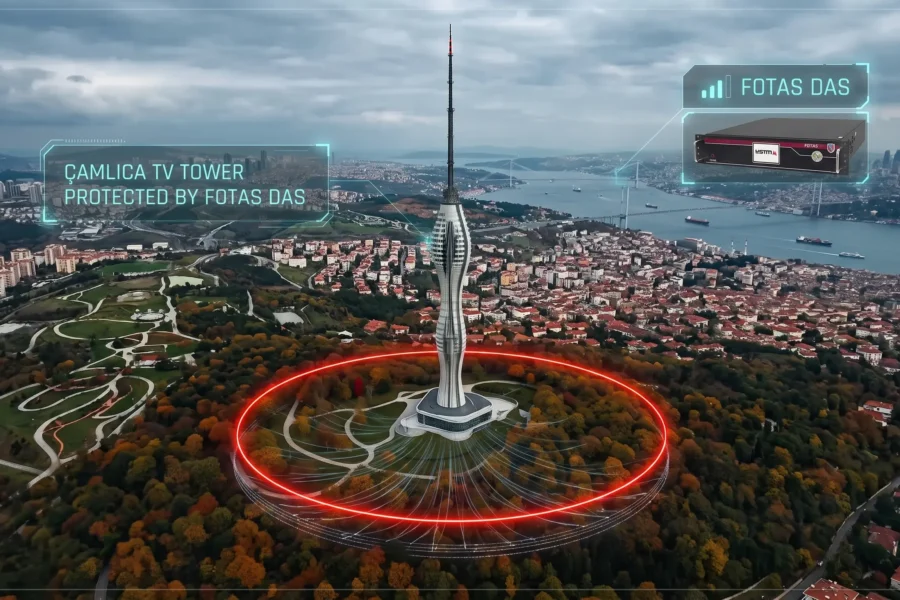
FOTAS technologies have been deployed in perimeter security projects across different regions and operating environments.
Reference applications include the Çamlıca TV Tower in Istanbul, the Tasiast gold mine in Mauritania, solar facilities in Brazil and high-security prisons in Mexico.
These projects provide practical deployment experience across urban, industrial, mining, renewable energy and remote environments. They also demonstrate the use of FOTAS across different perimeter layouts, terrain conditions and security integration requirements.
A typical DAS perimeter security system combines distributed sensing, event analytics, alarm management and interfaces with existing security infrastructure.
Any automated response should be defined according to the approved site security concept, system architecture and operational procedures.
Monitor physical activity across the complete installed sensing route rather than only selected sensor points.
Identify where a disturbance occurs along the protected boundary to support a faster, targeted response.
Assign detected signatures to configured event categories according to the site security concept.
Select fence-mounted, buried or hybrid sensing routes to match the barrier and terrain conditions.
The sensing cable requires no electrical power or powered electronic sensors along the protected route.
Connect detection information to CCTV, access control and command-and-control platforms.
The DAS interrogator, servers, communication equipment and analytics platform remain active system components and require electrical power and suitable protection.
Evaluate sensing cable deployment, detection zones, event categories and security system integration with the FOTAS engineering team.