


Fiber Installation
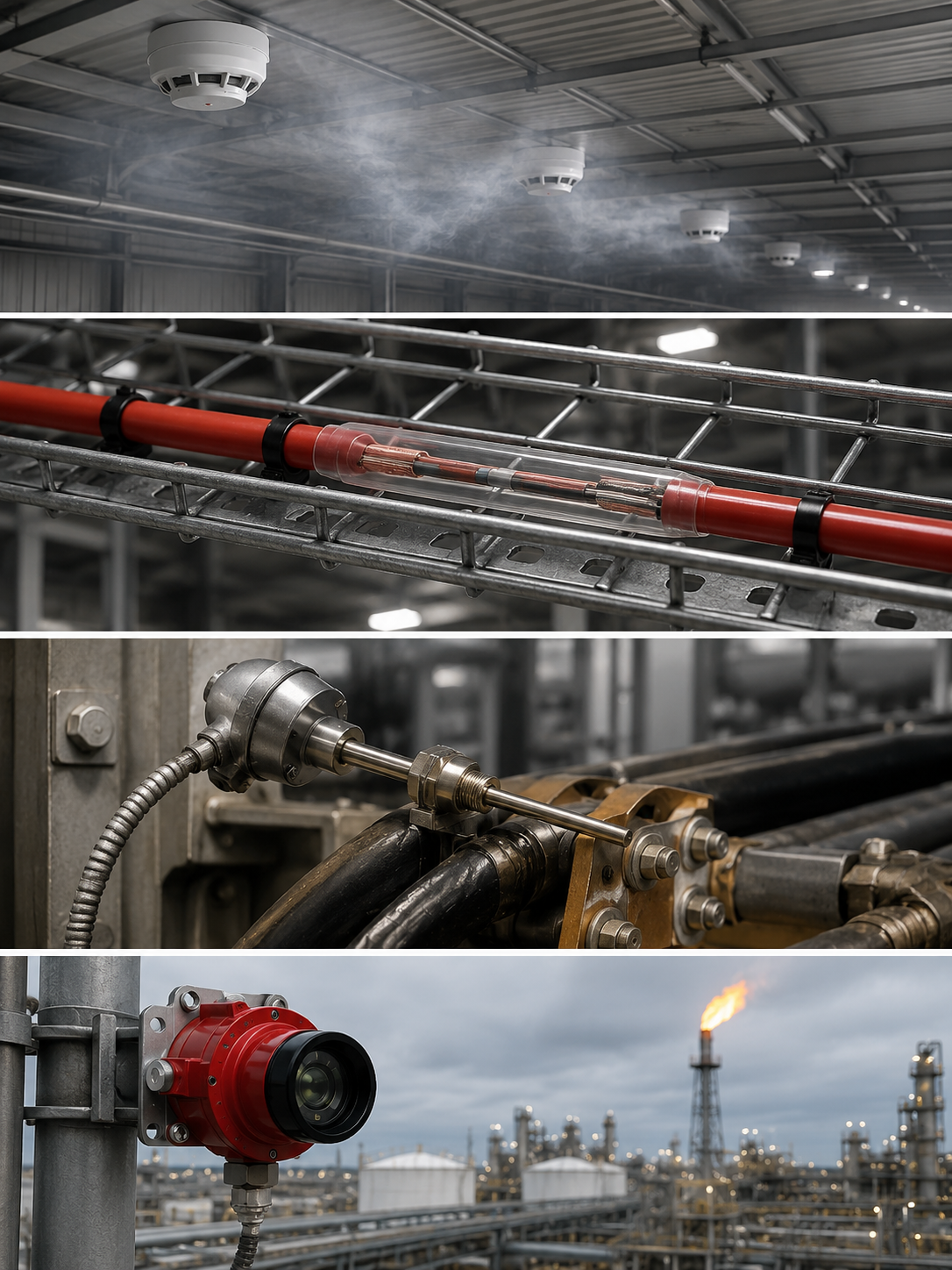
A suitable fiber optic sensing cable is installed along the protected route, asset or facility.

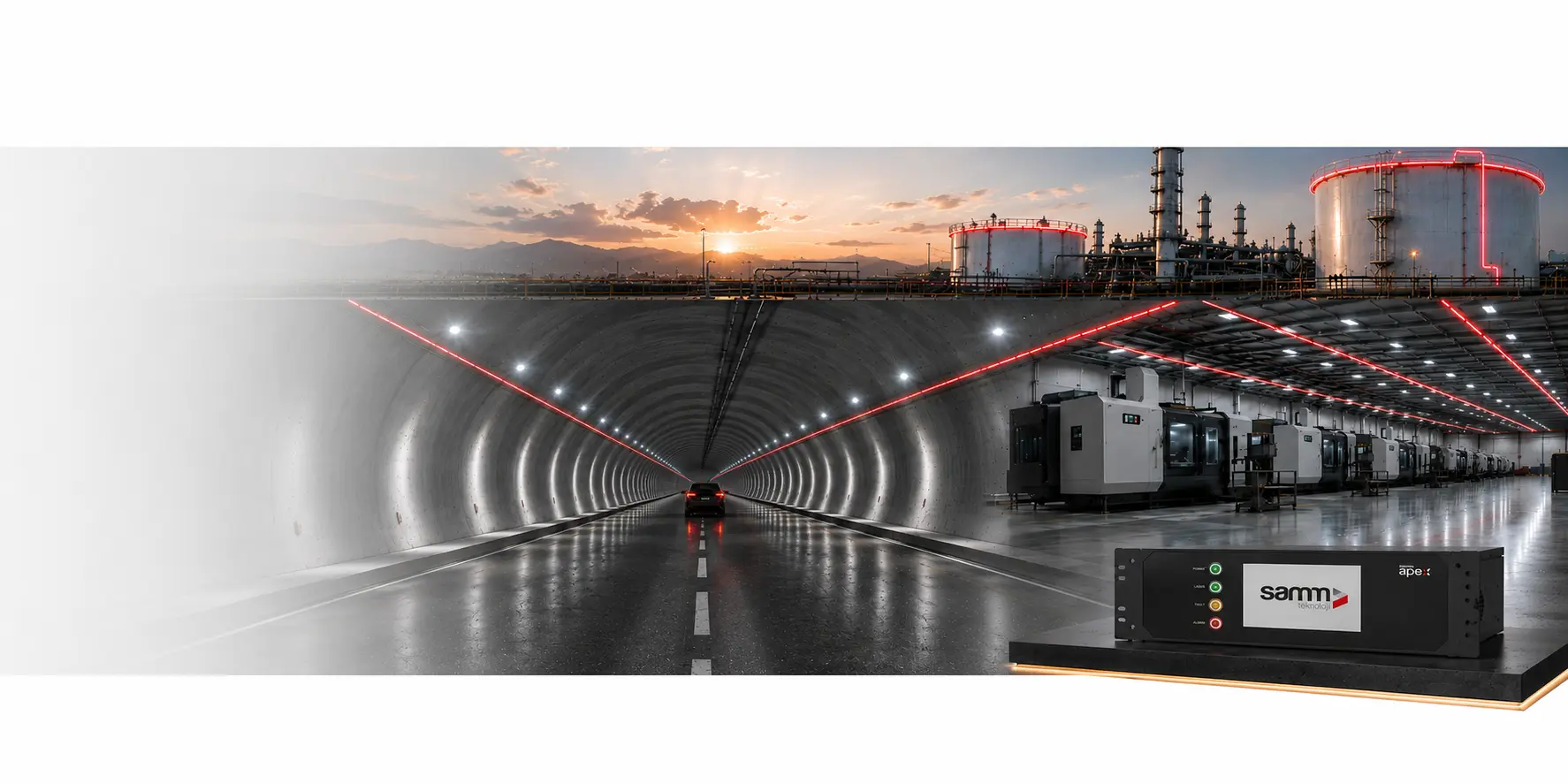
Continuous, real-time temperature monitoring and localized fire detection along optical fiber sensing routes.
FOTAS APEX is a next-generation Distributed Temperature Sensing solution designed for continuous linear heat detection and fire monitoring.
An optical fiber sensing cable is installed along the area to be protected. The APEX controller continuously analyzes temperature conditions along the sensing route and identifies localized increases, developing hot spots and configured alarm conditions.
Unlike individual point detectors, FOTAS APEX provides spatially resolved temperature information along the full installed fiber route. Unlike conventional binary linear heat detection cables, it provides digital temperature measurements and thermal profiles rather than only an alarm or no-alarm signal.
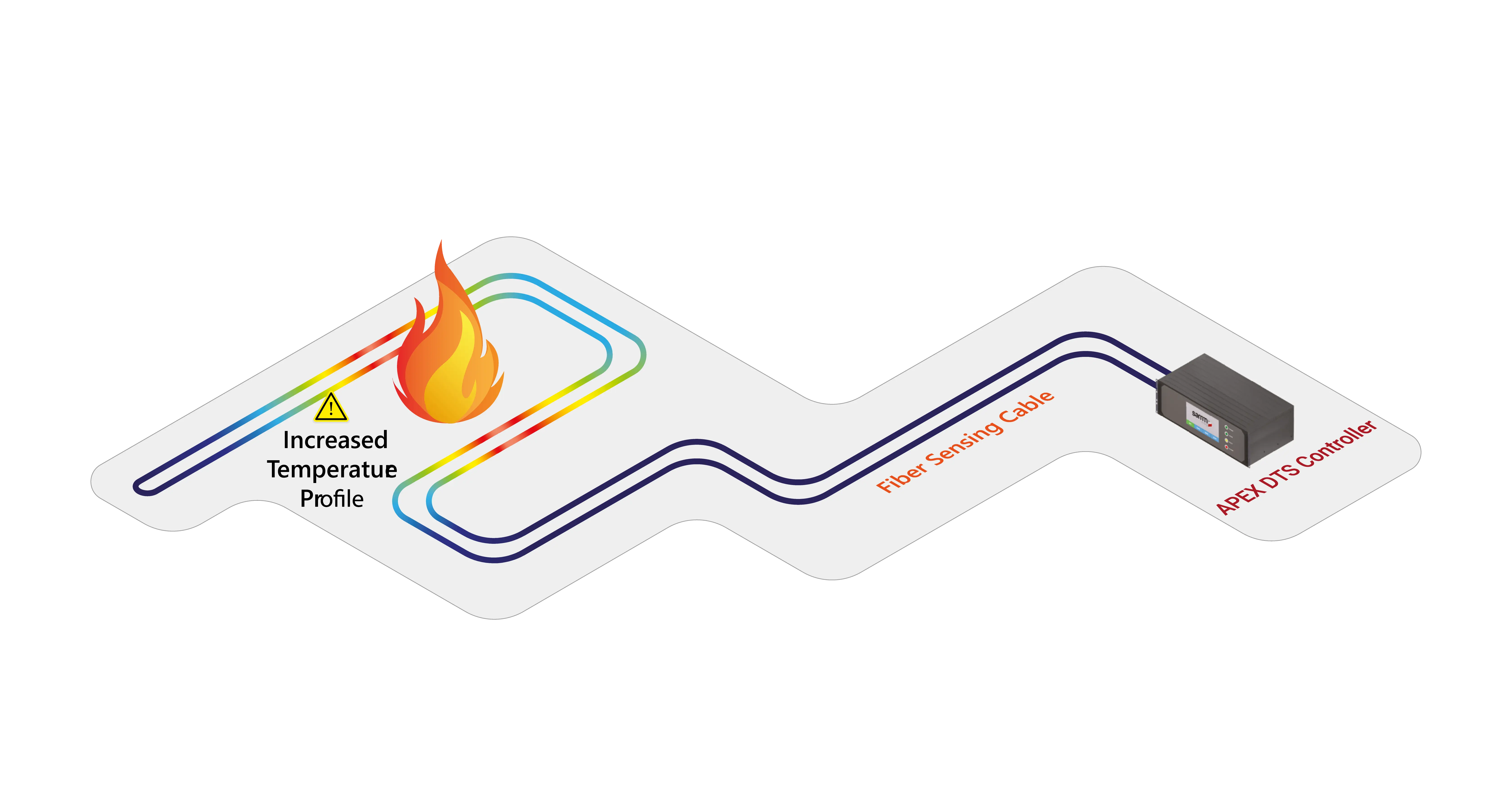
A suitable fiber optic sensing cable is installed along the protected route, asset or facility.
The APEX controller sends laser pulses through the sensing fiber and analyzes temperature-dependent optical backscatter.
The system produces a continuous temperature profile along the cable rather than measuring only isolated points.
Abnormal temperature conditions trigger an alarm and identify the affected position along the sensing route.
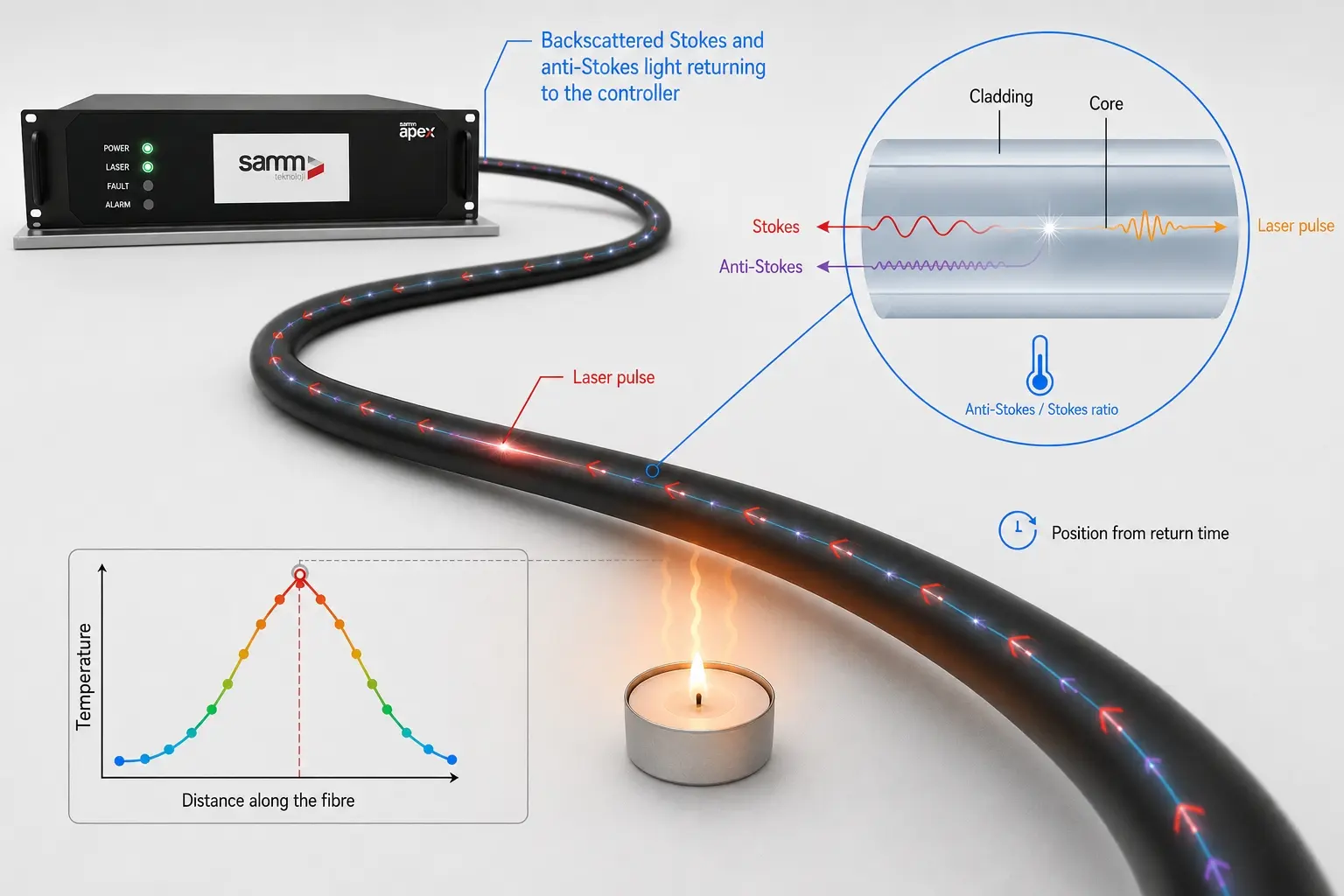
Learn how Raman backscatter and time-of-flight measurement provide temperature and position information.
Monitor temperature conditions across the full installed sensing route.
Generate alerts when configured temperature thresholds are exceeded.
Detect developing thermal events through abnormal rates of temperature increase.
Identify where abnormal heating is developing along the sensing route.
Divide the sensing route into project-specific alarm and monitoring areas.
Review temperature profiles and event history for operational analysis.
Final sensing distance, spatial resolution, temperature accuracy and response time depend on the selected configuration, sensing cable, installation and project requirements.
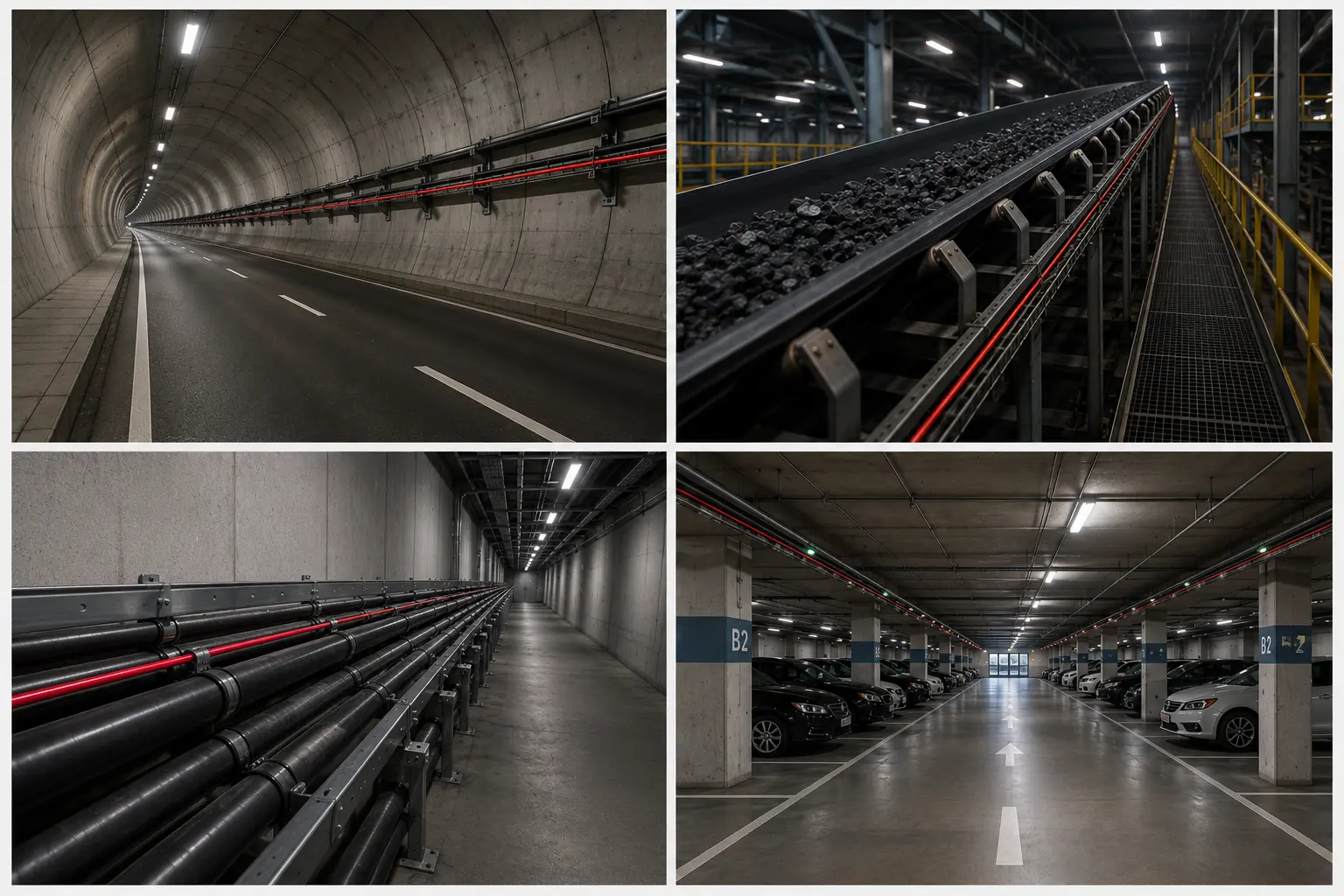
Temperature conditions are monitored continuously along the full sensing route.
Developing overheating and abnormal temperature increases can be detected at an early stage.
Identify the affected position along the fiber to support a faster, targeted response.
Receive continuous temperature values and thermal profiles, not only a binary alarm.
The optical sensing cable is unaffected by electromagnetic and radio-frequency interference.
No electrical power or powered electronics are required along the sensing cable route.
Passive sensing infrastructure supports durable operation with minimal field equipment.
Configure alarm zones, thresholds and response logic according to the protected facility.
| Compared With | FOTAS APEX Advantage |
|---|---|
| Point Smoke and Heat Detectors |
|
| Traditional Linear Heat Detection Cables |
|
| Point Temperature Sensors (RTD / Thermocouple) |
|
| Infrared and Flame Detection |
|
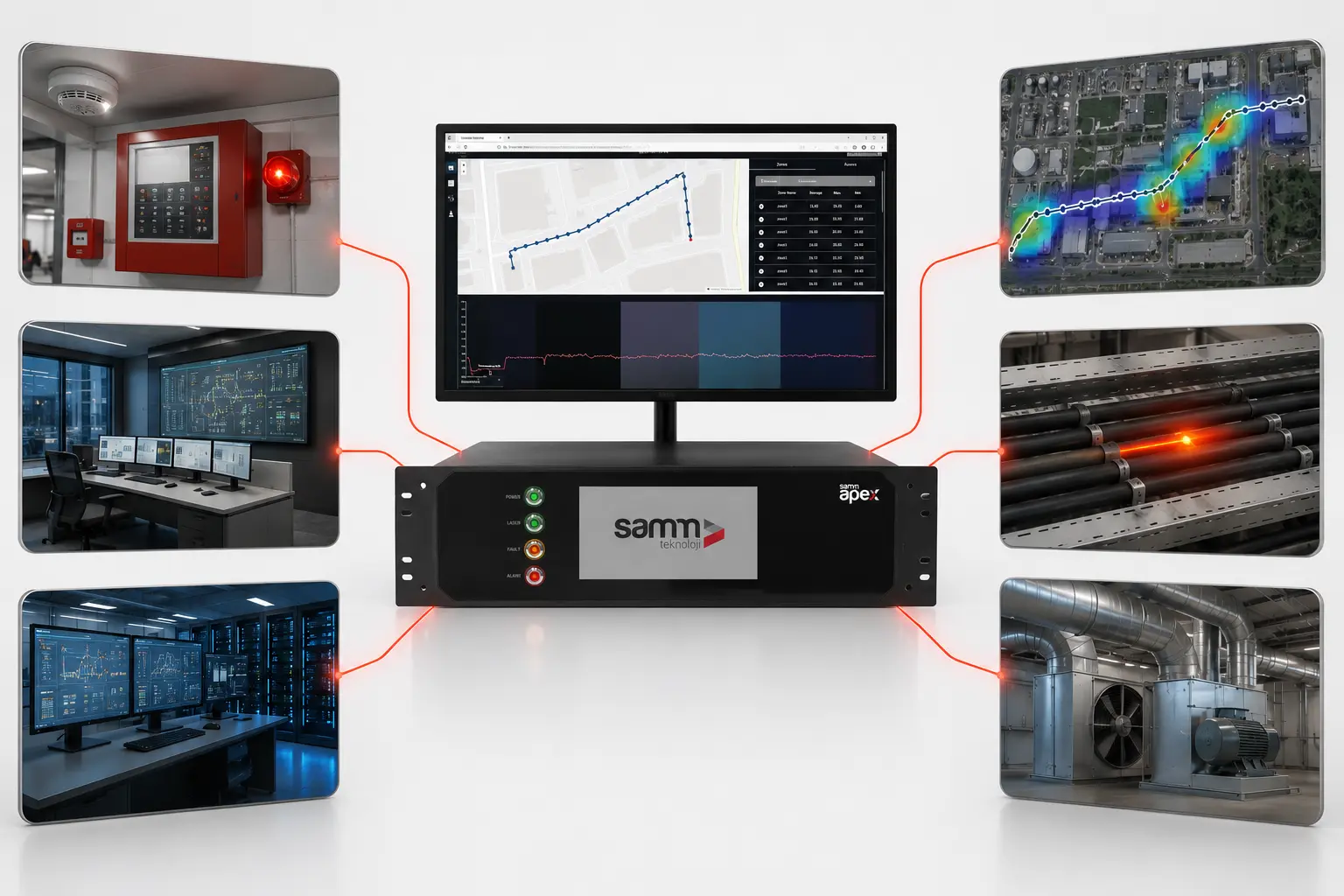
FOTAS APEX can be integrated with fire alarm, Building Management System and SCADA or monitoring platforms. Depending on the approved project architecture, APEX alarms and temperature information can support site visualization, hot-spot indication, alarm notification and ventilation control logic.
FOTAS APEX is designed for compliance with recognized linear heat detection, approval and functional safety requirements.
Linear heat detection system requirements for fire detection applications.
Designed to address applicable VdS approval requirements for linear heat detection systems.
Designed to address Safety Integrity Level 2 requirements for system reliability.
More than 20 years of expertise in fiber optic sensing and system engineering.
Integration support for building management, fire control and site visualization platforms.
Sensing cable, alarm zones, thresholds and interfaces adapted to project requirements.
Application assessment, system engineering, commissioning and comprehensive after-sales support.
Discuss the protected asset, sensing distance, fire risk, cable route, alarm strategy and integration requirements with the FOTAS engineering team.