Fiber Optic Pipeline Monitoring with DTS and DAS
Oil and gas pipelines transport hydrocarbons across long distances, often through remote, environmentally sensitive or high-risk regions. Maintaining pipeline integrity, identifying developing leak conditions and protecting the right-of-way are critical to safe operations, environmental protection and regulatory compliance.
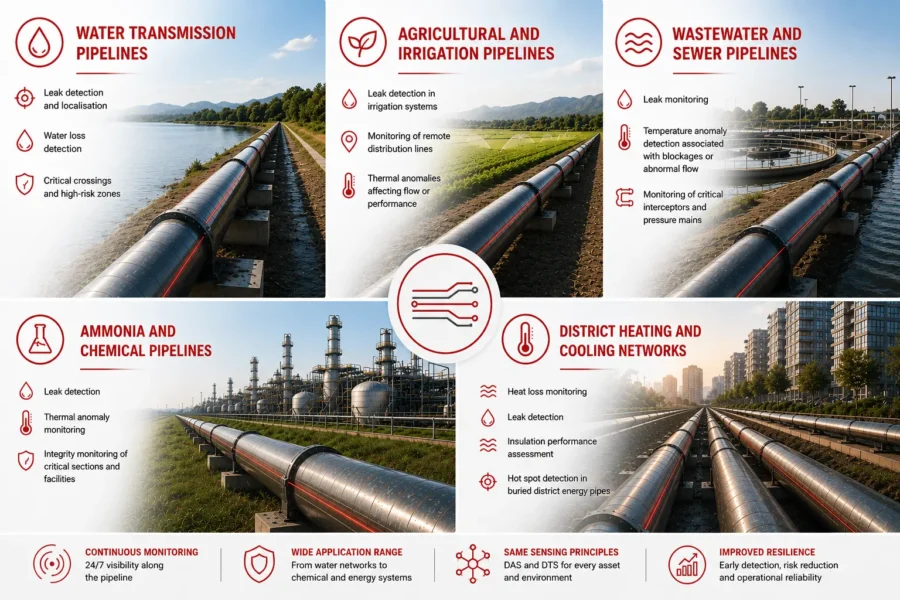
Similar monitoring challenges also affect water and wastewater networks, chemical and ammonia pipelines, district heating and cooling systems, irrigation networks and other critical utility corridors.
Two Critical Pipeline Risk Areas
Pipeline operators typically face two interconnected risk areas:
- Operational integrity risks, including leaks, product release, thermal anomalies and abnormal operating conditions
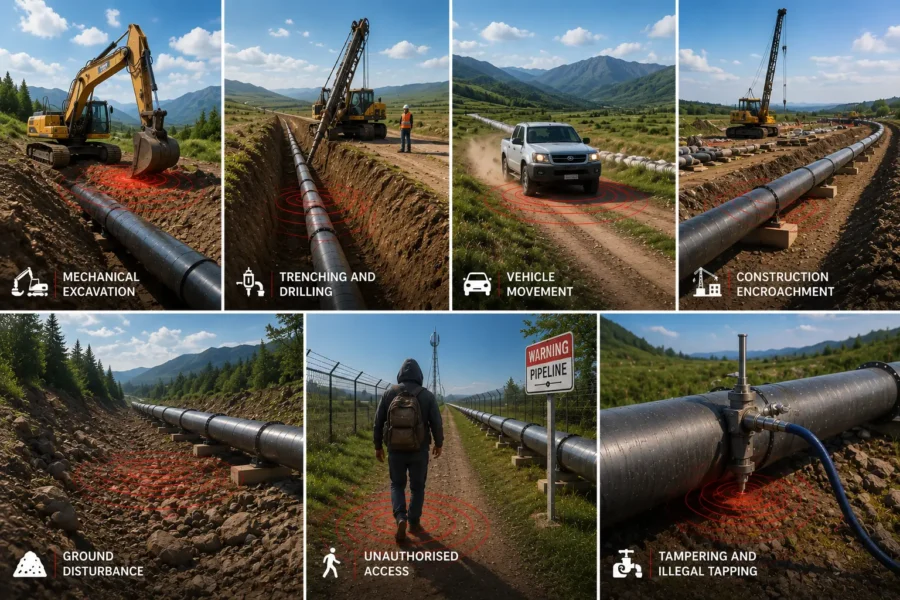
- Security risks, including third-party interference (TPI), accidental or unauthorised excavation, illegal tapping, vandalism and intentional intrusion
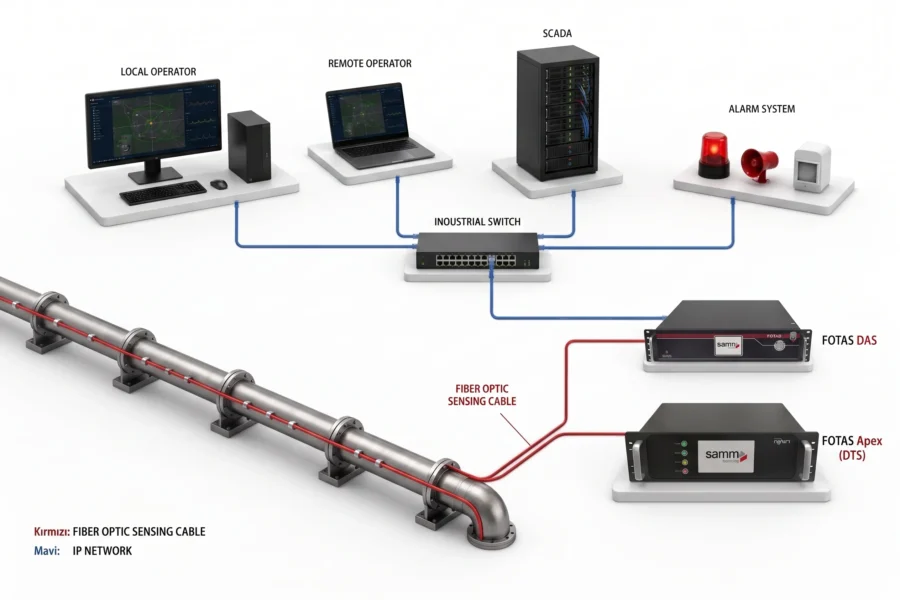
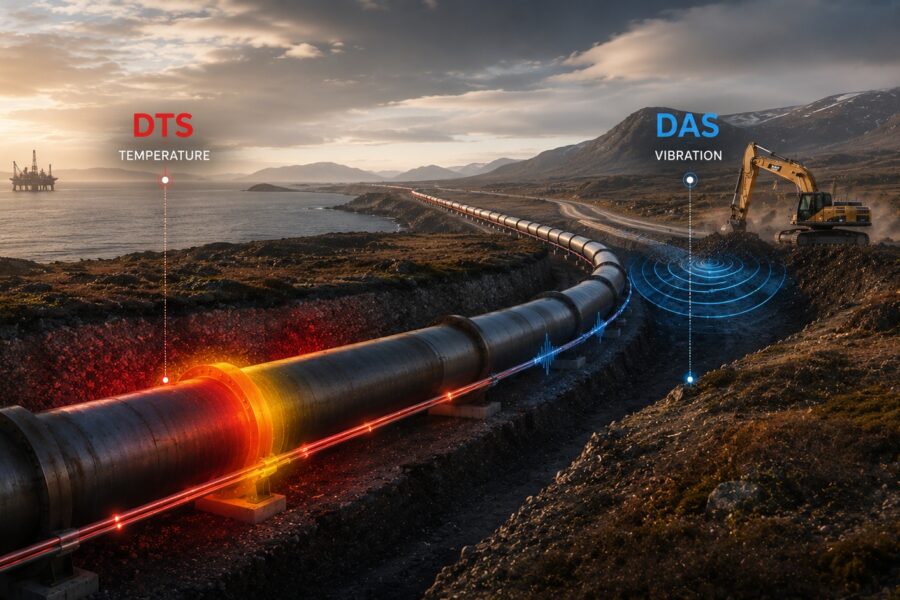
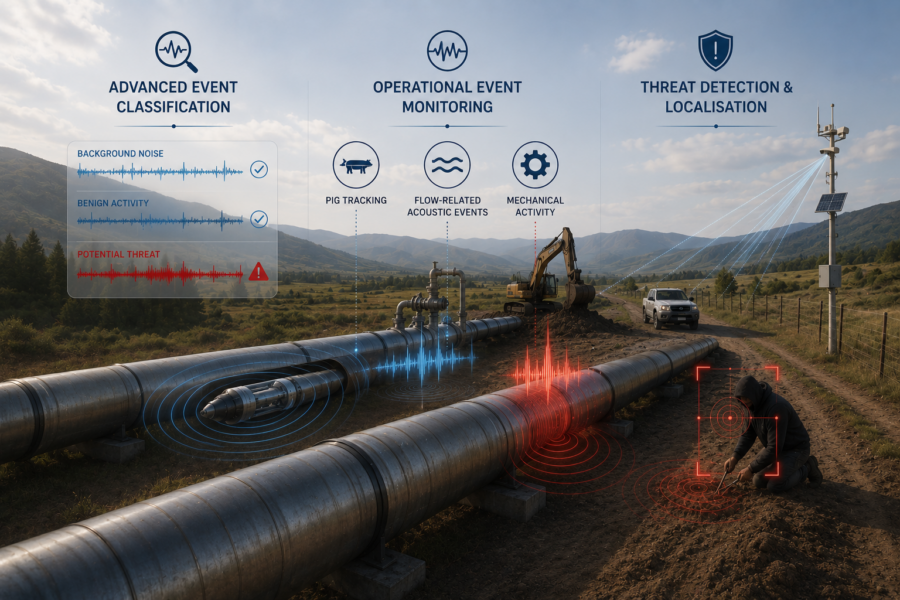
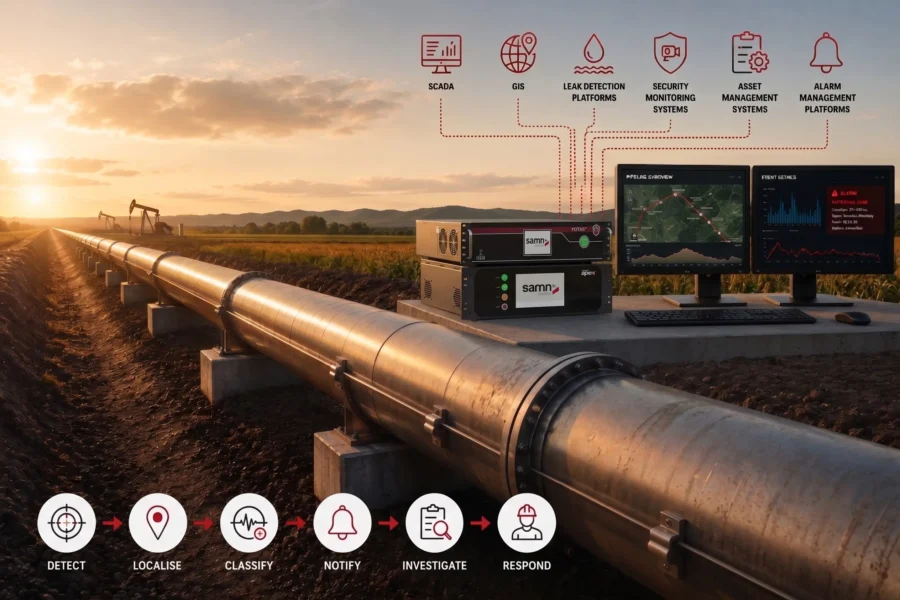
Fiber optic pipeline monitoring addresses both through complementary distributed sensing technologies. Distributed Temperature Sensing (DTS) provides continuous thermal monitoring for leak-related anomalies and integrity conditions. Distributed Acoustic Sensing (DAS) detects and classifies vibration and acoustic activity associated with excavation, drilling, vehicle movement, ground disturbance and other external threats.
Together, DTS and DAS provide continuous, real-time visibility across long pipeline and utility corridors where isolated measurement points may leave gaps.